
A free JLPT N4 course should not feel like an N5 deck with several hundred extra cards attached. The important change is how familiar pieces must work together. At N5, a learner may succeed by recognizing a short pattern, a clear classroom exchange or one direct sentence. On the way to N4, the same grammar and vocabulary appear inside longer passages, less predictable conversations and questions where the first plausible answer is not always correct. Your routine therefore has to train connection, not just collection.
This guide turns that transition into a practical plan you can follow with free materials. It begins with an honest N5 audit, then changes reading, listening, grammar, vocabulary and test review one layer at a time. It does not promise a passing score or treat N4 as a fixed official list of words and kanji. Readiness depends on whether you can understand unfamiliar tasks with reasonable accuracy and pace. The aim is to make your study behavior match the skill the test actually asks you to demonstrate.
A free JLPT N4 course begins with an N5 audit
Start with a mixed N5 set before buying a new book or building a larger schedule. Read a short notice, answer several language-knowledge questions and listen to a brief exchange without pausing. Mark each answer as secure, guessed or misunderstood. A score alone hides the useful information. Two learners with the same total may need opposite plans: one may read accurately but lose the thread in audio, while another may know many words yet misread particles and verb endings under time pressure.
Sort every miss into four causes: missing knowledge, slow recognition, sentence parsing or task strategy. Missing knowledge means the word or form was genuinely new. Slow recognition means you knew it after the clock stopped. Parsing means every piece looked familiar but the relationship between them failed. Strategy means you overlooked the question, contrast or speaker intention. Spend the first week repairing the largest category. Moving forward while basic kana, conjugation or particles remain unstable only makes N4 material feel harder than it is.
- Do one short mixed N5 diagnostic without notes.
- Label confidence before checking the answer.
- Classify the cause of every error, not only the topic.
- Choose one repair priority for the next seven days.
Understand what officially changes from N5 to N4
The official JLPT level summary describes N5 as the ability to understand some basic Japanese. It mentions typical expressions and sentences written in hiragana, katakana and basic kanji, plus short, slowly spoken conversations in classroom and everyday settings. N4 is still basic Japanese, but the reading description expands to passages on familiar daily topics written with basic vocabulary and kanji. In listening, the goal becomes generally following conversations encountered in daily life when they are spoken slowly.
That wording matters more than an unofficial claim that N4 contains exactly a certain number of words, kanji or grammar forms. The JLPT explains levels through reading and listening abilities alongside language knowledge; it does not publish a definitive vocabulary or kanji list. Use lists as organizational aids, not as proof of readiness. Your stronger evidence is performance: can you follow a connected passage, retain who did what, notice a change of plan and choose an answer when the wording differs from the phrase you memorized?
Change reading from sentence decoding to passage control
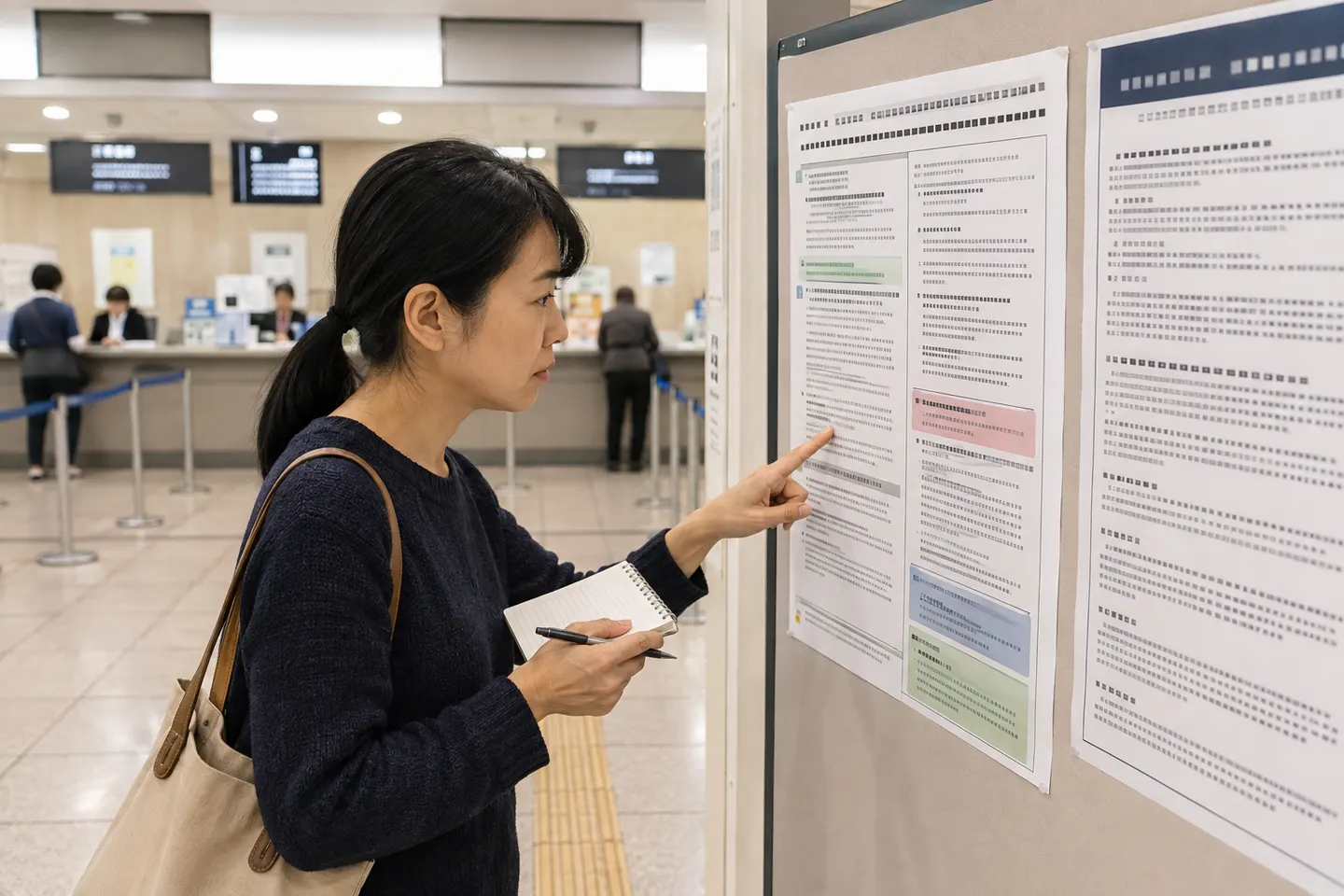
An N4 routine needs short passages several times a week, not only isolated grammar questions. On the first pass, identify the text type, final predicates and basic timeline. On the second, underline connectors such as でも, それから, ので or けれども and mark what changes after each one. On the third, answer the question without translating every line. This sequence trains you to preserve the message while details accumulate, which is different from proving that you can decode one sentence with unlimited time.
Use familiar daily topics first: a message about meeting time, a notice about opening hours, a short account of a weekend or instructions for an event. After answering, summarize the passage in one simple sentence and identify the line that supports your choice. If you chose correctly for the wrong reason, count it as a review item. Gradually reduce furigana and dictionary use, but do not remove support all at once. The useful challenge is a passage that requires attention without turning every line into a lookup exercise.
- Predict the purpose from format and context.
- Track time, contrast, reason and change of plan.
- Answer before opening the dictionary.
- Point to evidence and summarize the main message.
Train listening for decisions, not perfect transcription
N5 listening can reward catching one direct time, place or action in a very short exchange. N4 practice should make you hold a little more context: who is speaking, what was originally planned, what problem appears and what the speakers decide. Before audio begins, inspect the question and options so you know whether to listen for a reason, order, destination or final choice. During the first play, resist translating. Build a small event map and wait for the sentence ending before committing.
Use a three-listen routine. First, answer under test-like conditions without pausing. Second, replay and write only the missed boundaries, particles or endings; a full transcript is unnecessary. Third, check the transcript, then listen once more with text hidden. Shadow one short line only when pronunciation or sound connection caused the error. If vocabulary caused it, study the word in that sentence and return the next day. Replaying an entire file repeatedly can create familiarity without teaching you why the first listen failed.

Turn JLPT N4 grammar into a network of choices
Longer grammar lists are not enough because an exam question often places several plausible forms together. Organize forms by job and contrast. For reasons, compare から and ので inside complete sentences. For simultaneous actions, practise ながら. For appearance or prediction, distinguish the uses you have actually studied instead of attaching one English label to そう. For an unintended or completed result, notice what てしまう contributes to the speaker's stance. These are common study examples, not an official fixed N4 grammar list.
Build a contrast card with a situation on the front and two possible sentences on the back. 明日は仕事なので、早く寝ます gives work tomorrow as a reason for sleeping early. 明日は仕事なのに、遅くまで起きています presents an unexpected contrast: although there is work tomorrow, the speaker stays up late. Say what changes, then create one new example. This trains selection. Copying a definition trains recognition only, and recognition is fragile when neighboring forms appear in an unfamiliar sentence.

Treat level labels as study guidance. The official JLPT does not certify one universal N4 grammar list.
Learn vocabulary and kanji inside useful relationships
At N4, a known word must be available quickly enough to support reading and listening. Study nouns with verbs and adjectives they naturally meet: 予定を変える, change a plan; 予約を確認する, confirm a reservation; 電車が遅れる, a train is delayed. A compact relationship is easier to retrieve than an English gloss floating alone. Add one sentence, one audio encounter and one later recall prompt. If the word is recognizable only on the original card, it is not yet dependable passage knowledge.
Learn kanji through those same words. Record the reading used in the word, its meaning in context and a second familiar compound when helpful. Avoid forcing every possible reading into one session. Mix scripts in short passages and use furigana as temporary feedback: attempt the word, reveal the reading, pronounce it, then reread the whole sentence. Track reading accuracy and retrieval rather than celebrating an arbitrary character total. N4 progress is visible when kanji makes familiar words faster to see, not when a spreadsheet reaches a fashionable number.
- Collect words from passages and audio, not only frequency lists.
- Save a useful collocation with each new item.
- Learn the kanji reading used by the word in front of you.
- Review inside a new sentence before counting the item as stable.
Make every practice test produce a repair plan
The official JLPT site provides sample questions and official practice workbooks. Use a small sample first to learn task formats and reveal weak processes; do not burn through every set simply to collect scores. Recreate test conditions for the first attempt, including one uninterrupted listening pass. Then review every option. Explain why the correct answer fits and why the tempting alternative fails. An answer key tells you what was wrong, while this explanation tells you what to change in tomorrow's study.
Keep an error log with four columns: task, evidence missed, cause and next drill. If you missed なのに, compare contrast sentences. If you forgot the first half of an audio exchange, practise holding a four-point event map. If a passage took too long because of three low-value lookups, repeat it with a lookup limit. Redo the same item after several days without seeing your notes. Improvement means the repaired decision transfers; memorizing the answer letter does not demonstrate that.

Follow a six-week N5-to-N4 transition cycle
Week one audits N5 and repairs the largest foundation gap. Week two adds four short passages and three decision-focused listening sessions. Week three organizes grammar into contrast groups and turns new vocabulary into collocations. Week four combines these skills under moderate time limits. Week five uses official-format samples, followed by precise error drills. Week six repeats a mixed set and compares causes, confidence and pace with the first audit. Keep one light review day each week so the plan remains sustainable when life interrupts it.
Do not treat six weeks as a promise of N4 readiness. It is one diagnostic cycle, and many learners will need several cycles with new material. Continue when you can understand the main point of unfamiliar daily-topic passages, generally follow slow everyday conversations, explain recurring grammar contrasts and finish representative tasks without panic-driven guessing. If one skill remains far behind, narrow the next cycle instead of increasing total study time everywhere. A good free plan responds to evidence; it does not punish you for missing an invented deadline.
- Week 1: audit and foundation repair.
- Weeks 2–3: connected reading, listening and grammar contrasts.
- Weeks 4–5: timed combinations and targeted error work.
- Week 6: reassess, compare causes and choose the next cycle.
The real move from N5 to N4 is not a bigger pile. It is the ability to keep basic Japanese connected for longer.