
Build skills together
Grammar, Japanese vocabulary, kana, kanji, reading and listening reinforce one another. Articles show those connections instead of treating every topic as a separate checklist.
Daily guides for Japanese grammar, vocabulary, kana, kanji, reading, listening and JLPT study.
 Featured
Map the beginning and end of a time span or route, then distinguish continuing until from completing by a deadline.
Read article Featured
Move from reciting the week to recognising, hearing and retrieving the day you actually need.
Read article Featured
Inspect a real lesson, its answers and your access conditions before choosing a book, an app or a small combination.
Read article
Choose the existence verb from the referent, then connect a checked example to an attempt, a correction and later review.
Read article
Separate what you read, what you hear and what your mouth does. Practise longer consonants without inserting another syllable.
Read article
Find out why you pause, repair decisive gaps and return to the passage without losing the message.
Read article
Choose the message before the verb: an action directed at something, or an event involving that thing.
Read article
Keep the first attempt, compare one difficult phrase and return to the message with the script closed.
Read article
Use real objects and changing speaker roles to decide whether a word stands for a thing or belongs before its name.
Read article
Choose the tool for your missing learning action: an explanation, a targeted attempt or a connected route through Japanese.
Read article
Choose between another hearing, slower speech and meaning support, then check the detail that lets your conversation continue.
Read article
Count a small everyday set, check complete readings and turn one exercise error into a useful review target.
Read article
Use a handwriting model, inspect the movement and test a short paper task. Build legible kana without turning every practice page into calligraphy.
Read article
Read the situation before translating the ending. Practise an ongoing action, an existing state and a repeated routine through a small lesson loop.
Read article
A broken streak needs a workable next session. Find a useful starting point, limit overdue review and build a return plan around the life you have now.
Read article
Start noticing pitch while keeping meaning and timing secure. A small listening, imitation and later-review routine helps you work on one useful word without chasing accent perfection.
Read article
Choose by what a normal week helps you understand, retrieve and say. A practical decision guide for a main beginner course, with a usable plan before any app purchase.
Read article
The JLPT does not publish one official N5 word list. Build useful coverage through situations, sentence patterns, listening and retrieval instead of chasing a perfect checklist.
Read article
Read a Japanese sentence as linked phrases leading to a predicate. Particles preserve relationships when phrases move, while context controls what can disappear.
Read article
Use one short graded text for seven days, keep the story moving when words are unknown, and turn rereading into a different task each time.
Read article
Stop relying on a vague visual impression. Compare one diagnostic feature, attach each character to a real word, and test the pair again in sentences.
Read article
A word can feel familiar and still disappear when you need it. Test four different connections so review reflects what you can read, hear, retrieve and use.
Read article
Shadowing works when sound, meaning and timing stay connected. Use a short dialogue, understand the scene, follow its rhythm and then make the language your own.
Read article
Stop attaching the same ending to every adjective. Learn the two patterns, practise four useful forms and switch them inside sentences you might actually say.
Read article
A mock-test score locates the result. A useful review explains each miss, separates knowledge from timing and creates a small task you can test again.
Read article
A model sentence is useful only when you can change it, say something true and carry the pattern into a new exchange.
Read article
A mixed-script sentence is not three unrelated alphabets. Each change of script can help you locate a word, a grammatical link or a reading clue.
Read article
A small downloaded lesson, a real attempt and a later review can turn disconnected travel time into useful Japanese practice.
Read article
Use pronunciation guides to enter a text, hide them for an honest attempt, then bring them back only where they repair understanding.
Read article
Stop translating both particles as “at.” Choose に or で from the role a place plays in the event, then test the choice with the verb.
Read article
Start longer Japanese texts before you feel perfectly ready, then grow length, independence and reading speed in a measured sequence.
Read article
Keep the scene, the useful sentence and the word together. Then test whether you can use the same language in a different situation.
Read article
Turn one short, level-matched clip into a complete listening session: predict, listen for the situation, find one detail, diagnose one gap and recall the message.
Read article
Turn the form you meet in a sentence into a likely dictionary entry, confirm it against context and return to reading before the lookup becomes a detour.
Read article
Use recurring kanji parts to notice structure, compare similar shapes and look up unknown characters—without memorising a second disconnected syllabus.
Read article
Hear one beat, hold two beats and make Japanese long vowels clear without turning every speaking session into a technical phonetics lesson.
Read article
Turn a familiar-looking card into a fair retrieval test, diagnose the exact miss and carry the word back into real Japanese.
Read article
Stop memorizing disconnected endings. Learn the three verb groups through requests, negatives, past events and linked actions you can recognize and produce.
Read article
The move to N4 is not simply more flashcards. Change how you read, listen, connect grammar and diagnose mistakes so basic Japanese becomes usable under pressure.
Read article
Read for situation, sentence structure and useful meaning before opening a dictionary. Translation becomes a check rather than the engine of every sentence.
Read article
Stop guessing from English spelling. Read long vowels, small ッ, inserted vowels and compact sound combinations as part of the Japanese word.
Read article
Choose a daily target you can still remember, recognize and use tomorrow instead of chasing a word count that makes every review session heavier.
Read article
Learn to hear phrase boundaries, reduced forms and familiar grammar in continuous speech instead of chasing every syllable after it has passed.
Read article
Build a first Japanese study routine that connects kana, grammar, vocabulary, kanji, reading and listening without trying to learn everything at once.
Read article
Learn kanji through useful words, sound and repeated reading so each character becomes part of Japanese you can actually retrieve.
Read article
Stop searching for one English translation. Learn how topic, focus, contrast and shared context change the choice between は and が.
Read article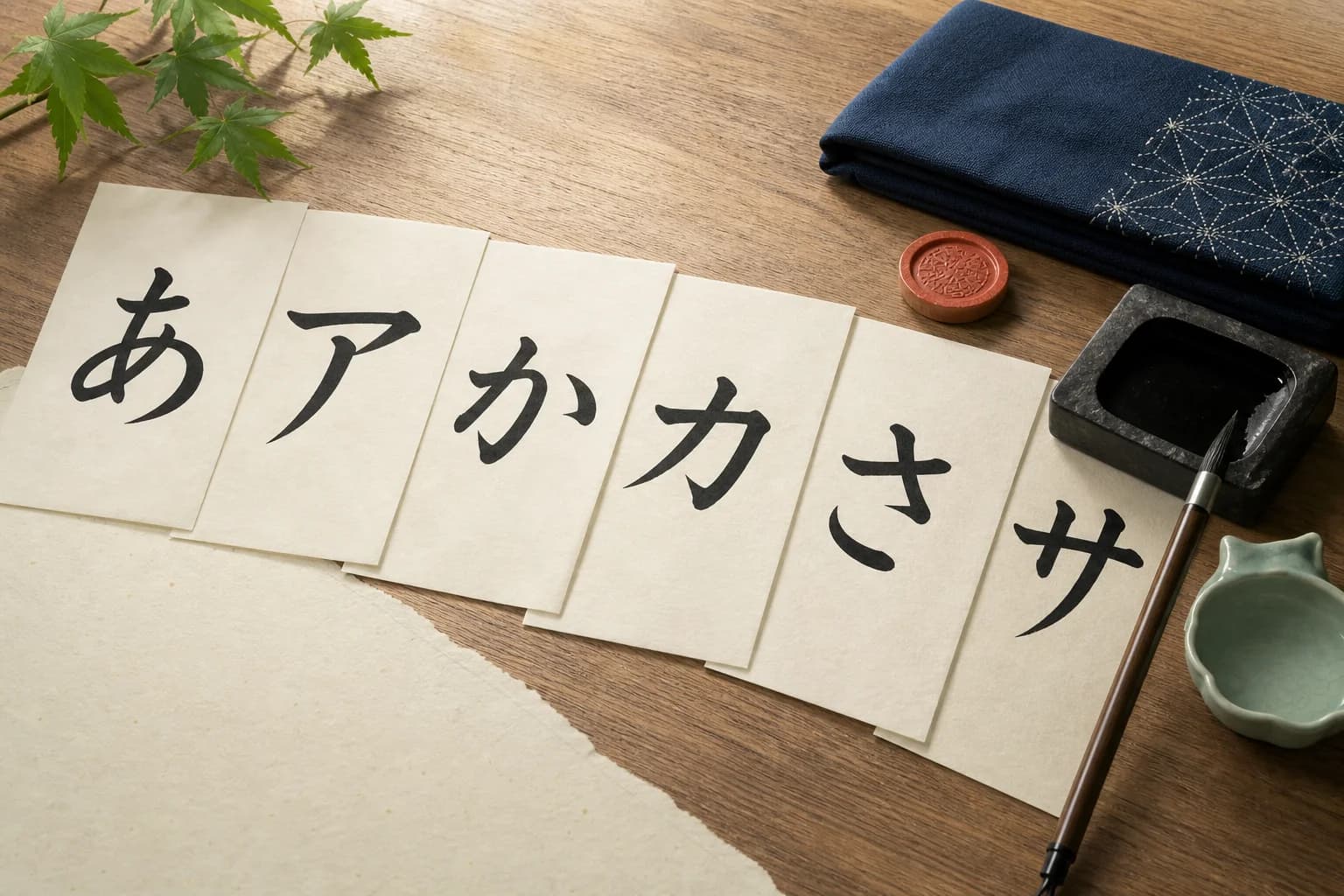
Move from recognizing isolated characters to reading real Japanese words with a short daily routine built around sound, contrast and retrieval.
Read articleThe KanaWay blog answers the questions that appear between lessons: how to stop relying on romaji, what a particle changes, how to remember a kanji reading, and how to turn a JLPT goal into a repeatable week. Every guide connects explanation with a practice method you can use immediately.
Grammar, Japanese vocabulary, kana, kanji, reading and listening reinforce one another. Articles show those connections instead of treating every topic as a separate checklist.
A wrong answer can come from sound, meaning, form, grammar or recall. The guides help identify that weak connection so the next practice task has a purpose.
JLPT N5, N4 and N3 provide helpful milestones. The underlying goal remains understanding new Japanese and producing a meaningful response without depending on a prompt.