
You can learn Japanese vocabulary from a food list and still freeze when someone asks what you want. The word for coffee may be familiar, yet the request and possible response remain separate. A topic label helps you find words; it does not turn them into language you can use. This free guide starts with a situation and keeps words attached to an action, sentence and reply.
We will follow one small café exchange, then carry its pattern into a shop and a ticket counter. You can practise the method with paper and a free dictionary. KanaWay, an upcoming Japanese learning app, can later connect a lesson, dictionary lookup, saved word, review and another encounter with the same language. The aim is not to memorise a bigger list today. It is to know what a word helps you do, recognise it in a sentence and retrieve it when the scene changes.
Learn Japanese vocabulary from a task, not just a category
Write a specific outcome before choosing any words: order a drink, ask whether an item is available, understand a departure time or describe a simple change of plan. ‘At a café’ is still too broad. ‘Ask for one drink and understand a question about taking it away’ gives you a speaker, a listener, a purpose and a possible response. That narrow frame tells you which words are useful now and which appealing extras can wait. The goal is not to imitate an entire native conversation on day one; it is to complete one honest, limited exchange.
For the café task, you might begin with コーヒー (coffee), 水 (water), ください (please give me), 店員 (shop staff) and 持ち帰り (takeaway). Do not mistake that set for a script: a real person can use other words, ask about size or change the order. Add only what the first exchange requires, then leave a blank for what you could not yet understand. The Japan Foundation's JF Standard describes language ability through practical activities in settings, a useful reason to organise your own practice around what you can actually do rather than a page of isolated nouns.
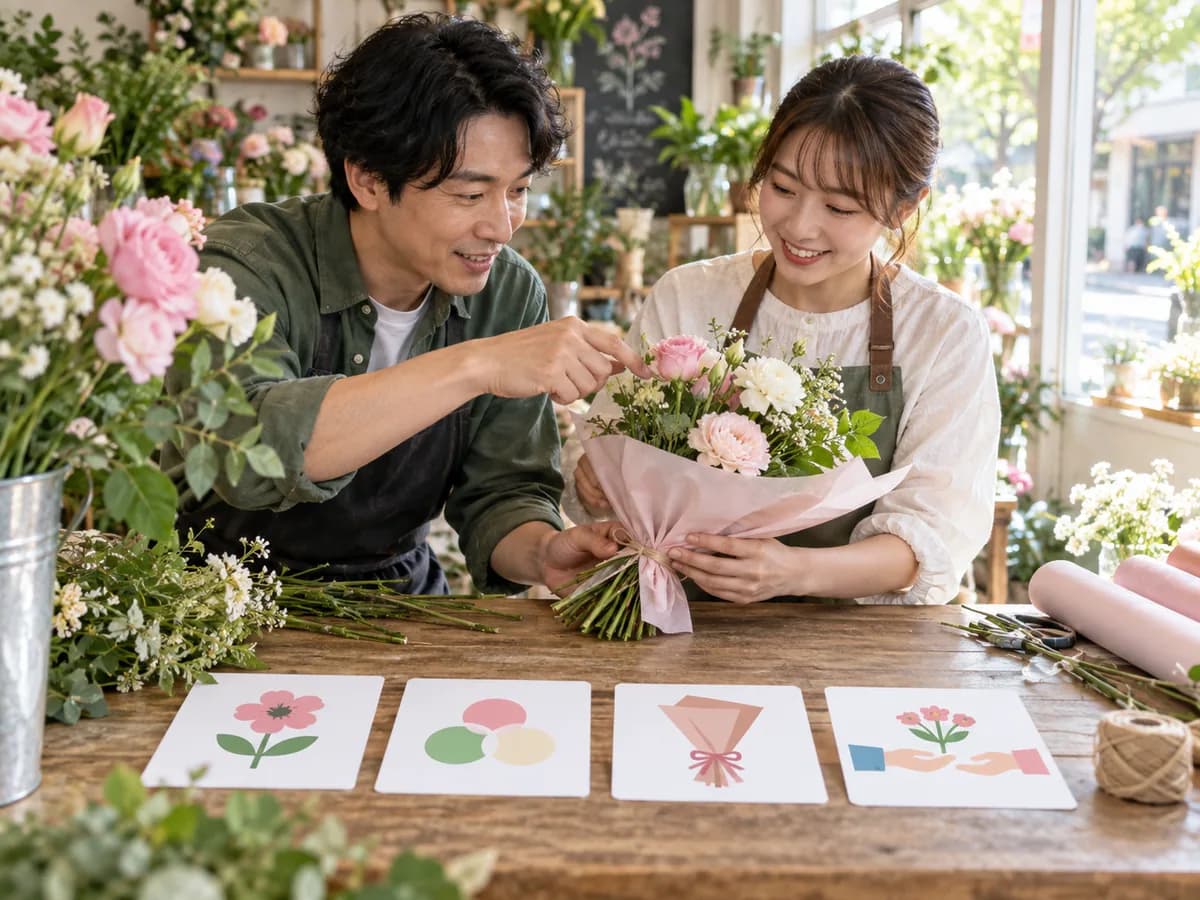
Keep the sentence that makes a word usable
A vocabulary card containing only ‘coffee = コーヒー’ tests recognition. Add a short, accurate line: コーヒーをください, ‘Coffee, please,’ in a request for an item. Then swap the object: 水をください, ‘Water, please.’ The particle を marks what is being requested in this pattern; the whole expression matters more than an English word-for-word formula. Say the line while imagining the counter, then ask what would need to change if you wanted tea. A small substitution reveals more than copying the original sentence five times.
Keep one sentence frame and one plausible variation with the entry, not a collection of increasingly elaborate sample sentences. For a verb, save the partner it naturally takes: 写真を撮る (take a photo), 電車に乗る (get on a train), 薬を飲む (take medicine). A dictionary gloss alone does not tell you which particle or partner normally belongs with that action. If a form is unfamiliar, confirm it in a trustworthy example rather than manufacturing a fluent-sounding line. The first card should be simple enough that you can reconstruct it without looking, yet rich enough to survive outside the original list.
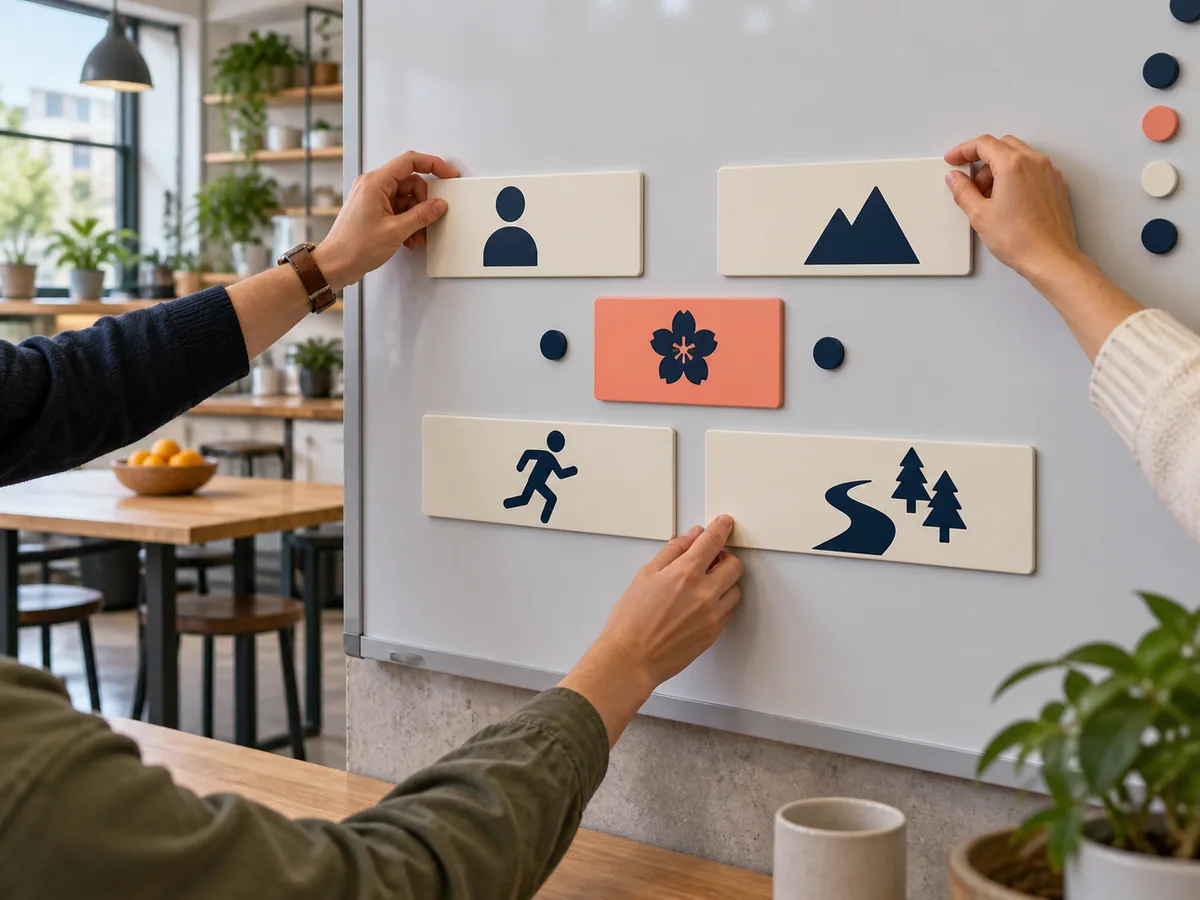
Build a small scene map with three roles
Divide a page into three columns: what you want to do, what you might say, and what the other person might say back. In the café scene, your goal may be to order water. Your line is 水をください. The other person's reply may include はい, ‘Certainly,’ or a question you do not yet know. A beginner does not need to produce every possible staff response. Recording that unknown response as a listening question is already useful: you have identified a gap created by the situation, not by a random word list.
Limit the map to language you can check. You might learn a noun, one request pattern and one response before adding a second ordering choice. If you know コーヒー but cannot hear it in a short line, that is a sound-recognition problem; if you hear it but cannot ask for it, that is a retrieval or sentence-frame problem. The distinction changes your next practice. The Japan Foundation's Erin vocabulary materials place words and key phrases alongside everyday scenes; browse one scene as a source of plausible language, then build your own tiny exchange without treating its full contents as today's memorisation quota.
Retrieve the request before checking the answer
Cover the Japanese side of the page. Look at a scene prompt, not an English translation: a counter, a glass of water and a customer waiting. Ask yourself what you would say. Produce 水をください before revealing the line. Next remove the water picture and show coffee. This tests whether you can retain the request frame while changing the object. Recognition after seeing the Japanese answer is not the same as producing it from a real intention. Be strict about which action you completed, but do not punish a useful partial attempt by starting the entire lesson again.
After the request, rehearse the other direction. Hear or read a short staff line and choose the appropriate action. If you cannot follow a question, note its decisive unknown word or ending and check it. Do not turn every failed exchange into ten new flashcards. Revisit the original scene later, with the answer hidden, and record whether you can complete the request and understand one response. A few honest rounds of retrieval are enough to expose which connection is weak. The aim is useful access under a small change of context, not a perfect score on a familiar screen.

Connect the lesson, lookup and review in KanaWay
KanaWay is still an upcoming app, so this is a workflow to use when it is available, not a claim that you can download it today. Begin with a short lesson that shows the language in a real exchange. Attempt its question before consulting the explanation. When a word blocks the exchange, use the built-in dictionary to inspect the entry and return to the sentence. Save the relevant word with its usable context, then let a later review ask for the answer before showing it. This keeps the scene and the form connected instead of splitting lessons, lookup and flashcards across unrelated places.
After review, meet the expression in another reading or voice. If you recognise it only on the saved card, seek a fresh encounter rather than mark it mastered. KanaWay is designed around a structured beginner-to-N3 path, with lessons, practice, saved vocabulary and offline access. The app cannot make every scene predictable, and a dictionary cannot replace speaking to people. It can offer a route back to the connection you missed, so your next attempt has a purpose.
Transfer one pattern to a different place
Do not let a café set become a sealed box labelled ‘food.’ Keep the communicative action and change the scene. The request pattern ください can also help at a shop or ticket counter, although the item, politeness and surrounding response may differ. In a shop, point to a specific item and ask for it; at a counter, identify the ticket you need. The question is whether you can select the right noun and make a request, not whether every line from the café can be carried over unchanged. In real Japanese, context, register and what has already been said still matter.
A second transfer works through verb partners. If you know 電車に乗る, try バスに乗る and describe what changed and what stayed the same. Contrast it with 写真を撮る: the English verb ‘take’ is shared, but Japanese uses a different verb and particle pattern. That contrast protects you from translating one English word mechanically into every scene. Try a new situation before adding new vocabulary. If you can make a correct old pattern work in a fresh place, the word has become more flexible than a card you can merely recognise.
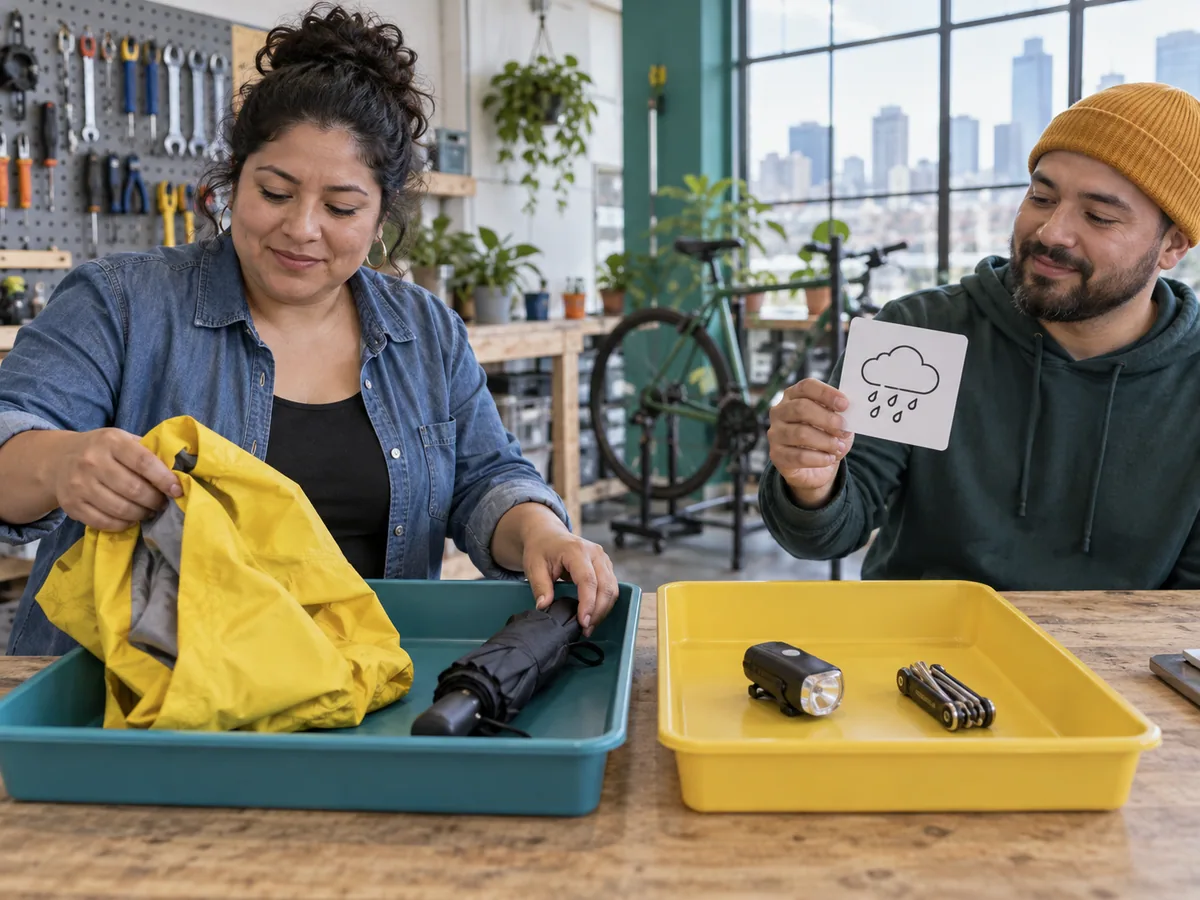
Choose review prompts that reveal the weak link
One word may fail in four different ways: you do not recognise its written form, miss it in speech, cannot recall it when you need it, or combine it with the wrong partner. Give each failure a different next step. Read a very short new sentence for the first. Listen to a level-matched utterance for the second. Hide the answer and use a scene prompt for the third. Compare two checked examples for the fourth. Repeating the same bilingual card cannot diagnose all four, even when it produces a satisfying streak.
Keep a tiny record with the scene, the exact sentence and one next action. ‘Could not retrieve 水 when ordering’ is actionable; ‘bad at vocabulary’ is not. Review the failed connection later, then return to a different scene to see whether it holds. When you can explain the intended action and produce a plausible Japanese line without the source page, the entry has done useful work. If you still need the original illustration to remember it, simplify the prompt and practise the missing link rather than adding more decorative context.
Use a week to deepen one scene, then move it
On the first day, choose one task and build two checked lines. On the second, practise the request with the answer hidden. On the third, add the likely reply or one question from the other person. On the fourth, hear or read an exchange and decide what happened. On the fifth, change one item in the same scene. On the sixth, move the pattern to a different place. On the seventh, return to the first scene without your notes and test whether you can now handle both the request and the response. The days are a sequence of decisions, not an official timetable for learning Japanese.
If a day reveals a larger gap, repeat the useful step. This plan avoids prescribing a daily number of new words; that question depends on level, time and review load. Here, the measure is whether a small set stays connected to meaning when the prompt changes. The entire sequence works on paper with free examples. An app helps when it brings back the right sentence at the right moment instead of hiding language behind a vocabulary counter.
Know when the vocabulary is ready for the next scene
Test three outcomes: can you identify the purpose of a short exchange, produce your own relevant line, and adapt that line when one detail changes? A word that passes only the recognition test needs another kind of practice. A word that works in a new sentence has stronger evidence behind it, though no single exercise proves permanent mastery. Return after some time and see whether the same action is still possible. You are not trying to make every real conversation effortless; you are giving yourself a reliable starting move and an honest way to notice what remains unfamiliar.
Learning Japanese vocabulary by situation works when the scene stays small, the sentence accurate and the word gets another chance elsewhere. Start with one request, one response and one transfer. Let the scene choose what matters, the sentence keep grammar attached, and retrieval reveal the weak link. Add the next word because it helps you understand or do something new, not because a daily checklist has an empty space.
A useful vocabulary set is not a themed pile of translations. It is a small exchange you can understand, attempt and adapt.