
Characters feel like arbitrary drawings
Start with form, one useful meaning and a common word already needed by the course.
Connect each character’s form, reading, meaning and stroke order to vocabulary from your course instead of memorising isolated symbols with nothing to say.
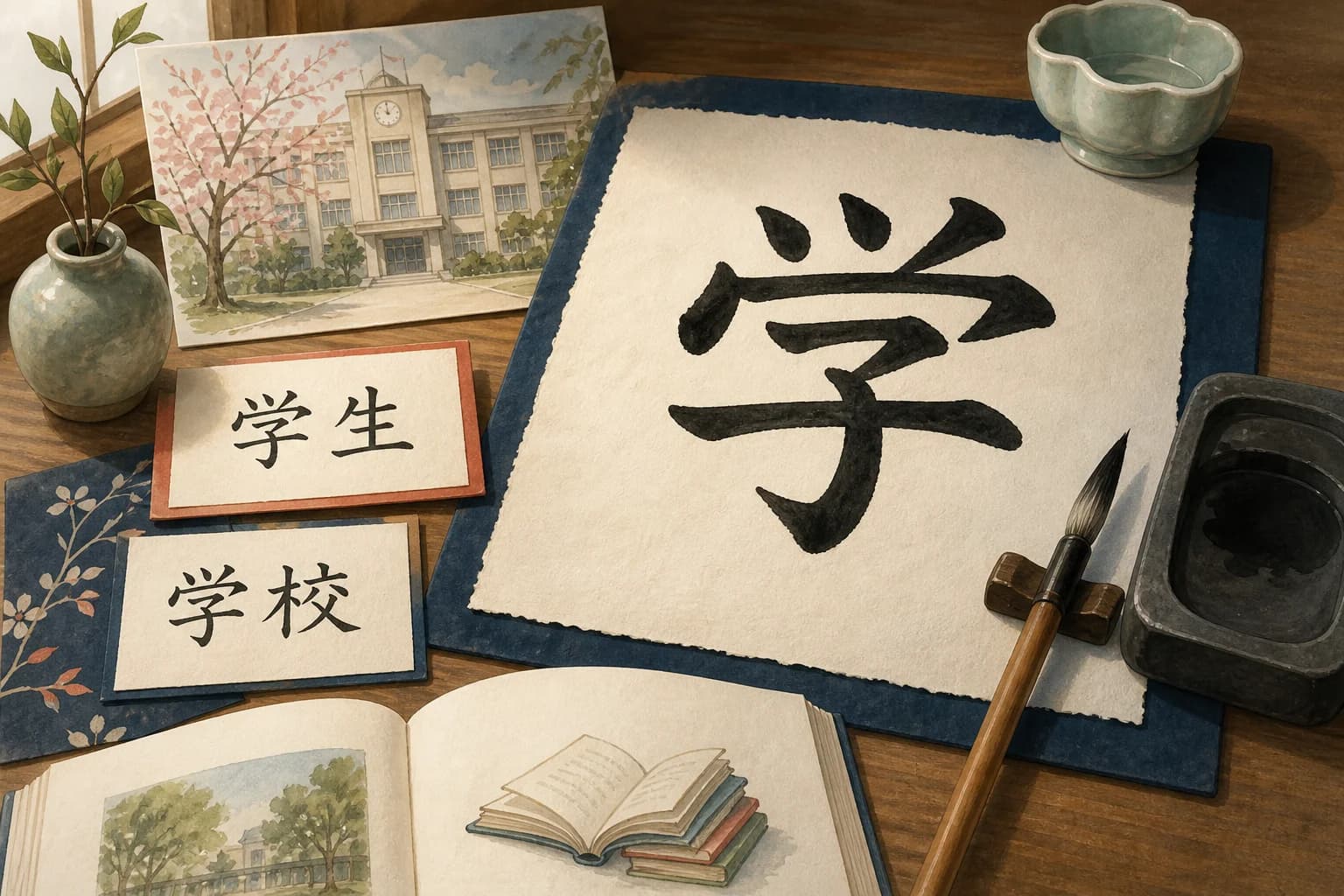
Kanji becomes frustrating when characters, readings and vocabulary are treated as separate lists. A character may have several readings, and the correct one depends on the word. Learning only an English keyword rarely prepares you to read it in a sentence.
Japanese introduces kanji through course vocabulary. You see the form, learn the reading used by the word, understand the meaning and practise writing when it supports memory. Later reviews can target the exact connection that remains weak.
This path suits beginners meeting their first characters and progressing learners who know meanings but struggle with readings in real vocabulary.
Start with form, one useful meaning and a common word already needed by the course.
Practise the reading attached to vocabulary rather than memorising every possible sound at once.
Separate meaning and reading recall, then schedule each weak connection through SRS.
Characters, readings and words are related but not identical memories. The course trains each connection and reunites them in sentences.
How one character becomes part of your reading vocabulary.
Distinguish the kanji from visually similar forms and connect it to a core meaning.
Learn readings through vocabulary rather than expecting one pronunciation to fit every context.
Practise the stroke sequence and compare your result with the reference form.
Use spaced review across meaning, reading and writing instead of one general mastery score.
A useful course word gives the character an immediate context and reason to remember it.
Connect the written form to meaning, relevant readings and example vocabulary.
Kanji Writing checks structure and stroke order without separating the character from language.
Lessons, reviews, dictionary entries and graded stories bring the character back in new contexts.
Characters, readings and words are related but not identical memories. The course trains each connection and reunites them in sentences.
Distinctive components, stroke flow and core meaning
Visual contrast, optional tracing and meaning recall
Distinguish the character from visually similar kanji
The pronunciation used in a common course word
Word cards, audio and kana-to-kanji matching
Read the target word without listing all dictionary readings
Vocabulary families, inflection and sentence meaning
Graded reading, dictation and mixed review
Recognise the correct word and reading inside a new sentence
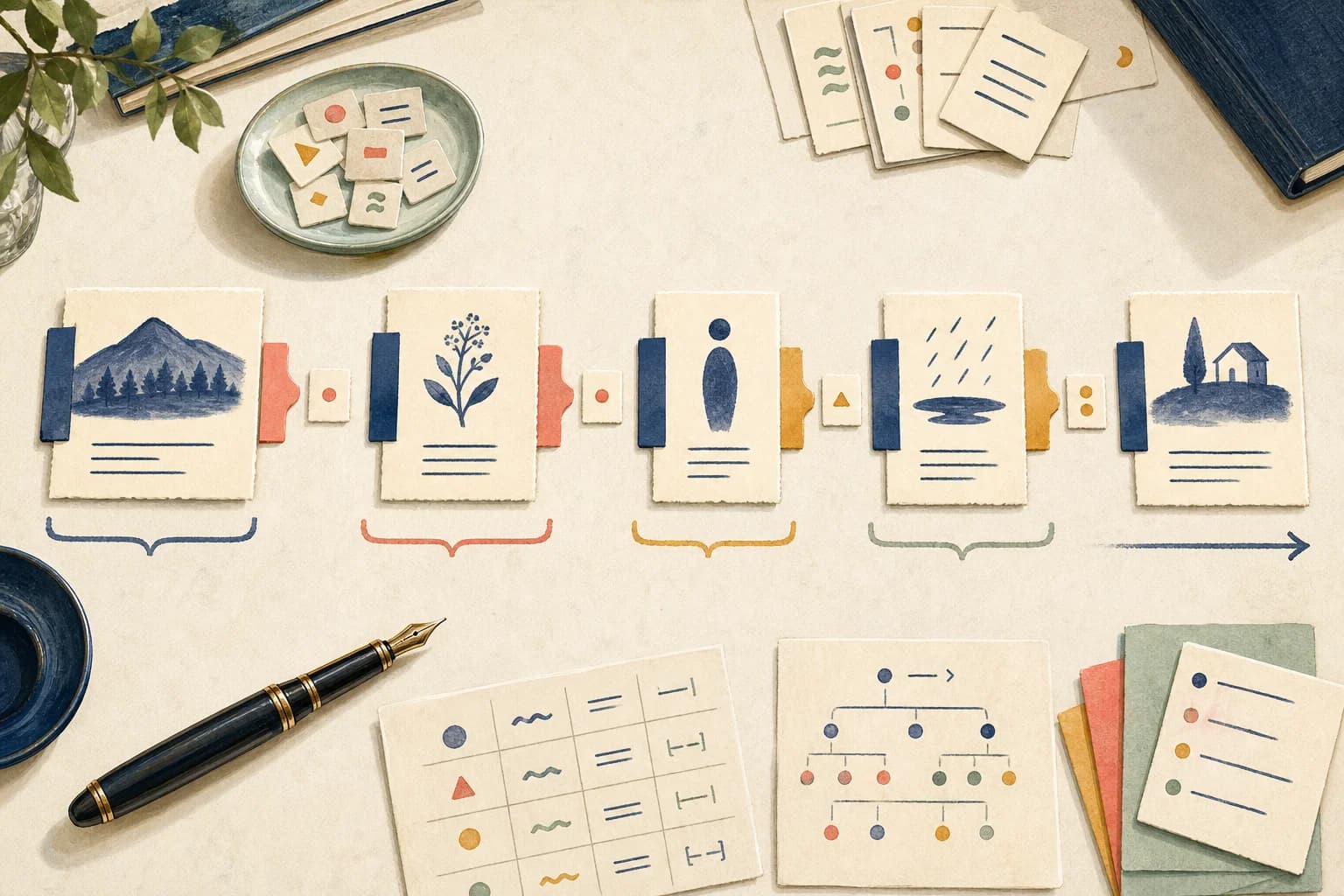
Common words, complete sentences and later retrieval make one useful reading memorable before the network expands.
Instead of memorising 食 as only “eat,” you meet it through words. 食べる teaches the reading た, while 食事 and 食堂 reinforce the on-reading しょく in compounds. The readings make sense because the vocabulary carries them.
A character can feel familiar while its reading remains unavailable. Test visual form, vocabulary, sound and contextual meaning as related but separate connections.
Notice the component or stroke feature that separates the target from visually similar kanji without keeping the keyword visible.
Retrieve the pronunciation attached to a common course word instead of reciting every possible reading of the character.
Use the surrounding sentence to select the relevant word meaning rather than stopping at a loose English kanji keyword.
Read the character when the font, neighbouring words or grammatical ending differs from the original lesson example.
Use the result to choose the next task. Writing can help you notice form, but recall should finish in Japanese vocabulary and context. Add another reading when a useful new word requires it, not because a dictionary lists it beside the character.
Use writing selectively to notice form; spend most time retrieving readings and recognising characters in actual words.
A correct meaning does not automatically make the word readable, so score both connections honestly.
Add one common vocabulary item and its audio before expanding to a wider word family.
Find the new character in context and use the sentence meaning to confirm the correct reading.
A long list of sounds gives no clue which one a real word uses.
Learn readings through high-value vocabulary and expand when a new word requires it.A keyword can aid recognition but does not teach Japanese usage.
Attach the character to Japanese words, pronunciation and a sentence.Repetition with the answer visible can become motor copying.
Use fewer recall-based traces, then read and retrieve the kanji in words.Concrete coverage for this level or skill, connected to lessons, practice and review.
The kanji path follows the vocabulary and communication goals of N5, N4 and N3. Level labels guide the order without pretending the JLPT publishes one binding official kanji list.
Trace and produce characters with stroke-order guidance. Writing scores can inform later practice while meaning and reading remain part of the same item.
Search a word by kanji, kana, rōmaji or English. See its reading, meanings, examples and course connections, then save it for review.
Direct answers about level, scope, support and offline learning.
The main system prioritises kanji inside useful vocabulary. Structural components can support recognition, but the end goal remains reading and using whole words.
Yes. Kanji Writing includes stroke-order guidance and keeps form connected to reading and meaning.
Kanji appears across the N5–N3 course in an order shaped by level goals and the vocabulary needed in each unit.
Course kanji, writing practice, saved progress, reviews and dictionary lookup are designed for offline use.
Learn, practise, review and complete the first three N5 units before deciding whether to unlock the full path to N3.