
Kanji practice often feels secure until two nearly matching characters appear in the same page. You know both cards separately, yet 未 and 末 blur together, or 持 becomes 待 when you read quickly. The usual reaction is to stare harder, copy each form ten times, or invent a dramatic story for the whole character. Those moves can create familiarity, but they do not guarantee that your eyes will select the feature that actually separates the pair.
A more reliable method treats confusion as a comparison problem. Put the characters side by side, name one visible difference, connect each form to a known word and reading, and then test the contrast in a sentence where meaning matters. This guide builds that process from diagnosis to delayed recall. It works with paper, a notebook, a dictionary and ordinary reading material, so the solution does not depend on a particular app or on memorizing arbitrary stories.
Why similar kanji stay confused after repeated copying
Copying can improve attention to stroke order and proportions, but the task is usually predictable: the model remains visible, the next character is known, and no competitor is present. Recognition in a real sentence is different. Your eyes must separate the target from plausible neighbours while also following vocabulary and grammar. If practice never places the competing forms together, it may strengthen the general feeling of familiarity without teaching the decision that reading requires.
The problem is rarely that the two characters are identical. More often, the learner has encoded a broad silhouette: a box with something inside, a vertical form with two bars, or a left-hand element beside a complex right side. Broad silhouettes are useful for a first orientation, but they collapse under pressure. Progress begins when you replace ‘these look almost the same’ with a specific observation such as ‘the inside is 口 here and 日 there’ or ‘this word begins with the hand component, not the step component.’
Kanji practice starts with one diagnostic feature
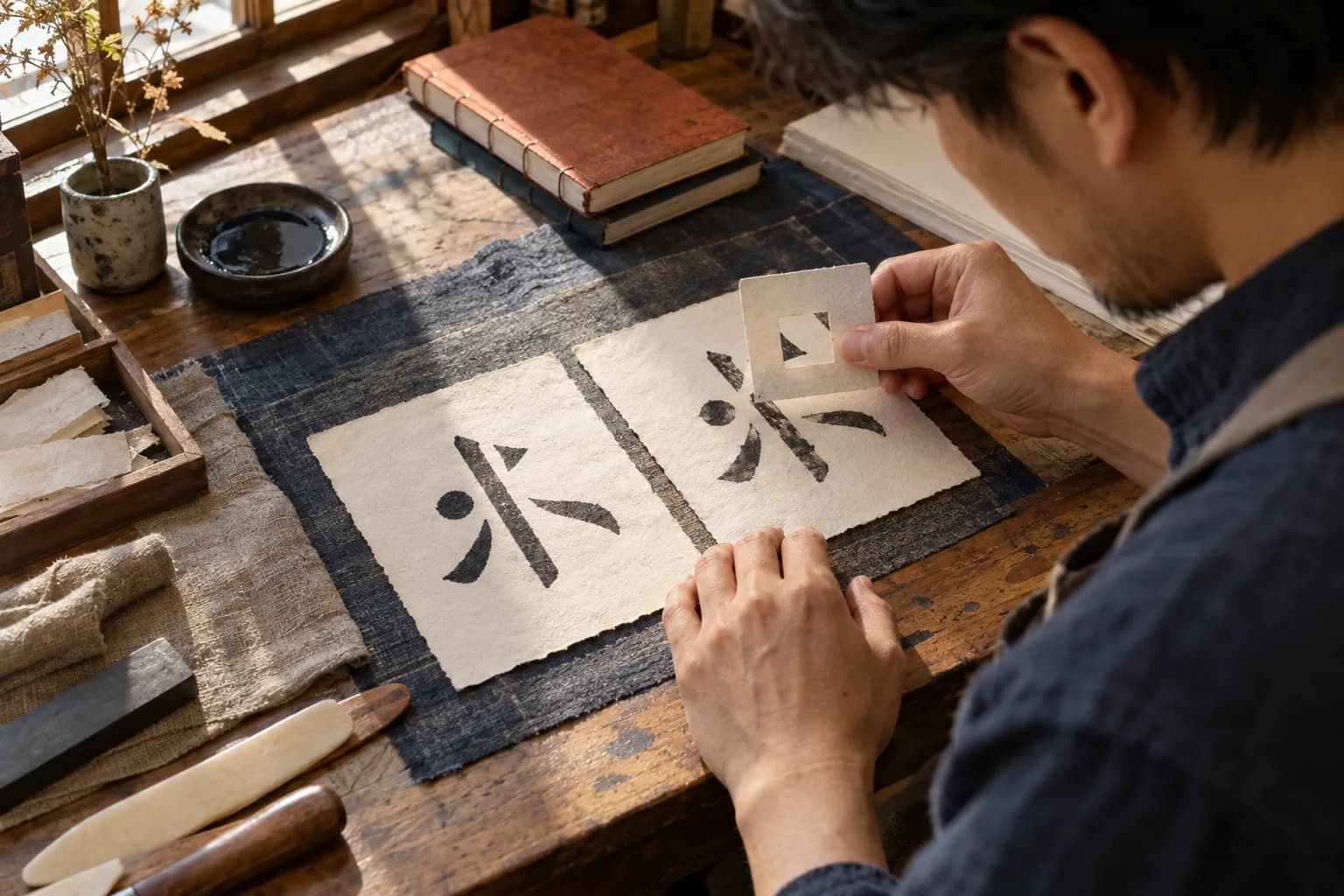
Choose one pair that you genuinely confuse and search for the smallest stable feature that separates it. For 未 and 末, compare the relative length and position of the horizontal strokes: in 末, the upper horizontal is longer; in 未, the lower of the two is longer. Do not describe every stroke. A diagnostic feature should be quick enough to check during reading and precise enough to reject the neighbour.
Now test the description against several printed forms. Fonts change stroke thickness, curvature and spacing, so a useful feature must survive those surface changes. The feature is not a drawing recipe and should not depend on one typeface looking unusually neat. If your rule fails in a common font, refine it with a component relationship or a word cue. The goal is a portable distinction, not a perfect verbal definition of the character.
Build contrast cards instead of isolated character cards
An isolated card asks whether you recognize one target. A contrast card asks which target is present and why. Put the confusing pair on the front with a short prompt: ‘Which one means not yet?’ or ‘Which one appears in weekend?’ On the back, record the diagnostic feature plus one anchor word for each character: 未定(みてい, undecided)and 週末(しゅうまつ, weekend). The words stop the visual distinction from floating without language.
Use pairs that come from your own errors rather than collecting long internet lists of lookalikes. A pair is worth training when you have met both members, can learn a useful word for each, and have actually selected the wrong one or hesitated. This keeps the set small and relevant. It also prevents a common mistake: introducing five unfamiliar neighbours at once and making every form less stable than before.
For 持 and 待, the right side 寺 is shared, so the left component does the decisive work. 持つ(もつ, to hold or carry)uses 扌, the hand component. 待つ(まつ, to wait)uses 彳, associated with movement or steps. You do not need a complicated scene joining temple, hand and road. Point to the changing position, say the anchor word aloud, and read a sentence that makes the verb necessary.
Attach every visual difference to a word you can read
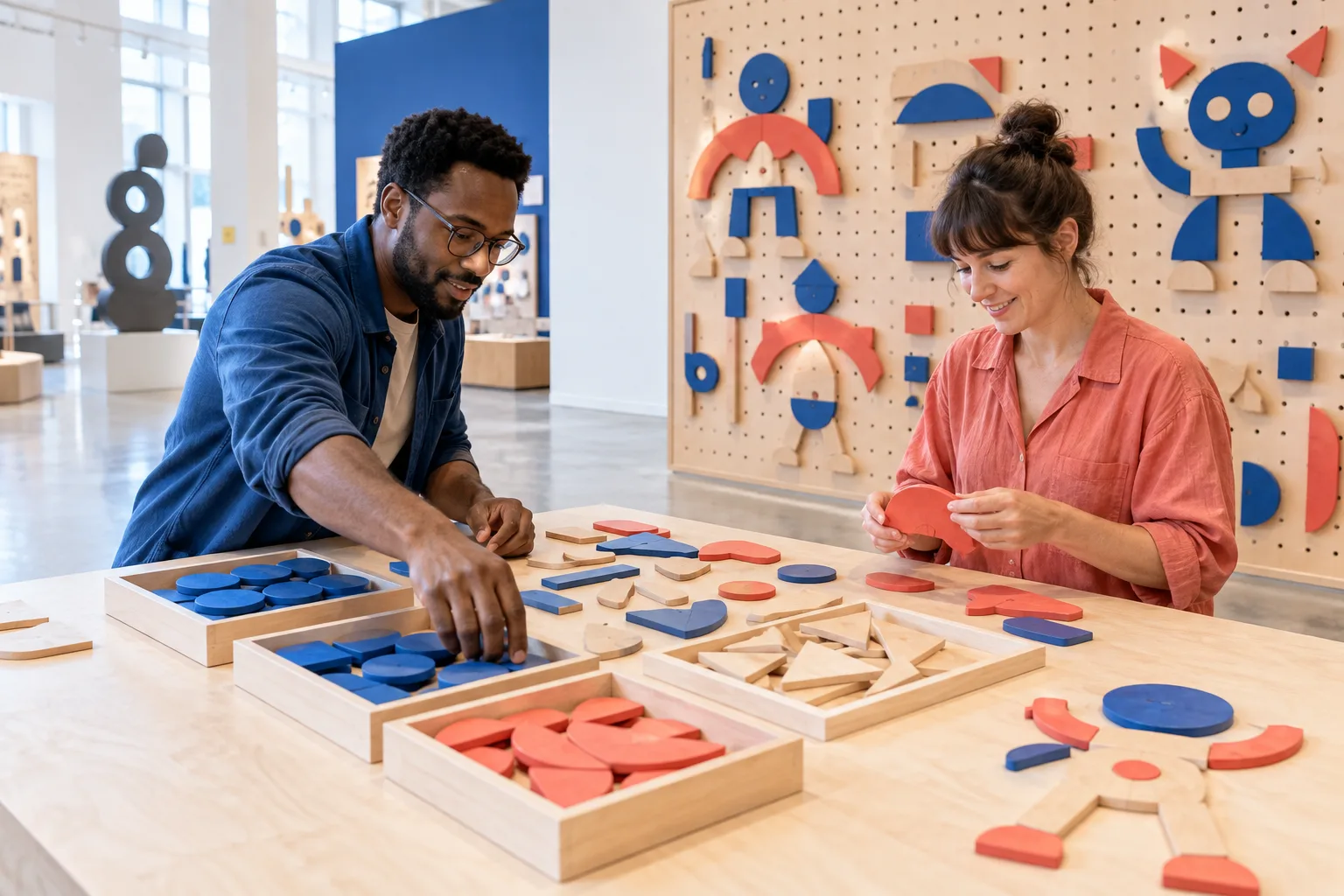
A character is easier to distinguish when it has a lexical address. Do not stop at ‘未 means not yet’ and ‘末 means end.’ Read words that preserve the difference: 未来(みらい, future)and 月末(げつまつ, end of the month). Then place each word in a short sentence: 未来の計画を話します and レポートは月末までです. The sentence gives the character a job and gives your memory more than a picture to retrieve.
This principle also limits the number of readings you study. Learn the reading used in the anchor word rather than attaching every possible on-reading and kun-reading to a new form. The official Irodori materials organize elementary kanji as kanji words, ask learners to check the reading and meaning, show the words in sentences, and expose them in different fonts. That sequence supports practical recognition: form, word, sentence and typographic variation reinforce one another.
Keep the two anchor words equally concrete. If one character has a familiar everyday word and the other has only an obscure dictionary compound, the pair remains unbalanced. Search your course, reader or dictionary for a word you are likely to meet. When no useful counterpart exists at your level, practise the known character against recognition of the unfamiliar one, but delay active production of the rare word.
Separate shape errors from word and reading errors
When you miss a character, record what actually failed. A shape error means you selected the neighbour before considering the word. A reading error means you identified the character but could not retrieve the reading in this word. A vocabulary error means the form and reading were available but the word’s meaning was not. A sentence error means you knew the word yet misread its grammatical role. One red cross cannot tell you which repair to choose.
Suppose you read 質問(しつもん, question)as a word containing 間 because both 問 and 間 have 門 outside. The visual repair is to compare the inside: 口 in 問 and 日 in 間. If you choose 問 correctly but cannot read 質問, practise the whole word. If you read it correctly but misunderstand 質問があります, the remaining problem is vocabulary or sentence comprehension. Diagnose first; otherwise you may copy a shape that was never the weak link.
Test the pair across fonts and real reading conditions
Start with a clear textbook font, then move to two other common printed styles. Change size as well: a feature that seems obvious on a large card may become subtle in a phone menu or paperback. Keep the words constant during the first font change so only appearance varies. Later, place the characters in new words or short notices. This staged variation prevents difficulty from rising in three directions at once.
Reading practice should eventually remove the instruction to look for the difference. Put one target word inside a short paragraph and ask a meaning question about the paragraph. If the distinction is reliable, you will use it while pursuing the message, not as a separate puzzle. The Japan Foundation’s Irodori description explicitly links kanji-word study with sentence reading and getting used to different styles. That is a better model for transfer than recognizing one oversized card forever.
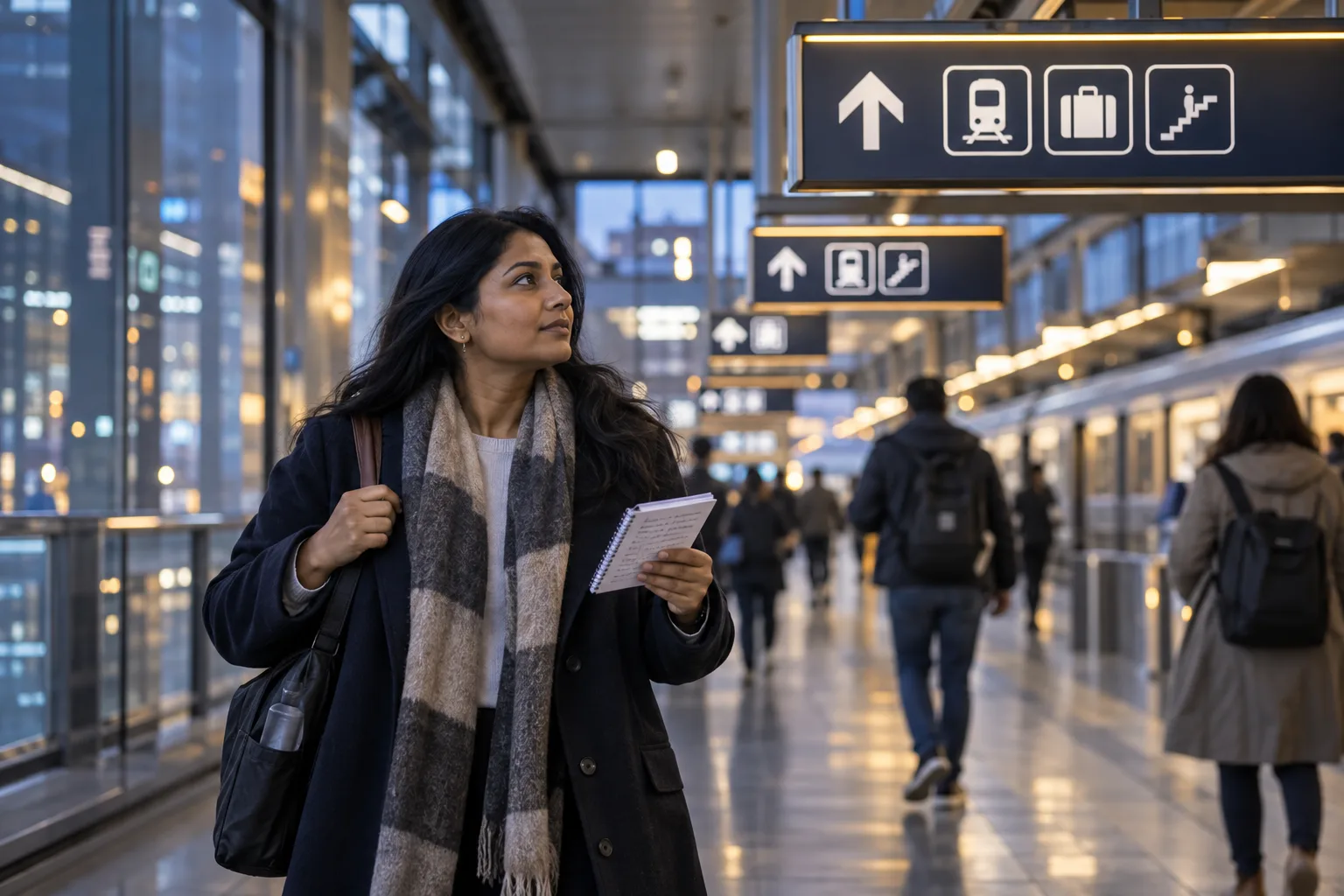
Do not treat handwriting, print and stylized signs as interchangeable on day one. Handwriting adds personal variation; display lettering may simplify or exaggerate strokes. First stabilize the contrast in ordinary print, then add one new source at a time. If a real sign remains ambiguous, use the surrounding word and context rather than pretending that visual form alone must settle every case.
Use mnemonics as an entry point, not the final test
A memorable image can help you enter a new form. The Japan Foundation even offers KANJI Memory Hint resources that use mnemonic pictures and quizzes. The trouble begins when a private story becomes the only route to the answer. A story may ignore the feature that distinguishes a neighbour, change every time you retell it, or take too long to run during reading. You do not need to ban mnemonics; give them a smaller job.
Use an image to establish the target once, then write a factual contrast underneath it: ‘問 has 口 inside; 間 has 日 inside.’ Add the anchor words 質問 and 時間(じかん, time). During review, hide the story and ask for the diagnostic feature, word and reading. If all three are available, the mnemonic has done its work. If only the story remains, return to a side-by-side comparison and a sentence.
Recall the difference before you copy the answer
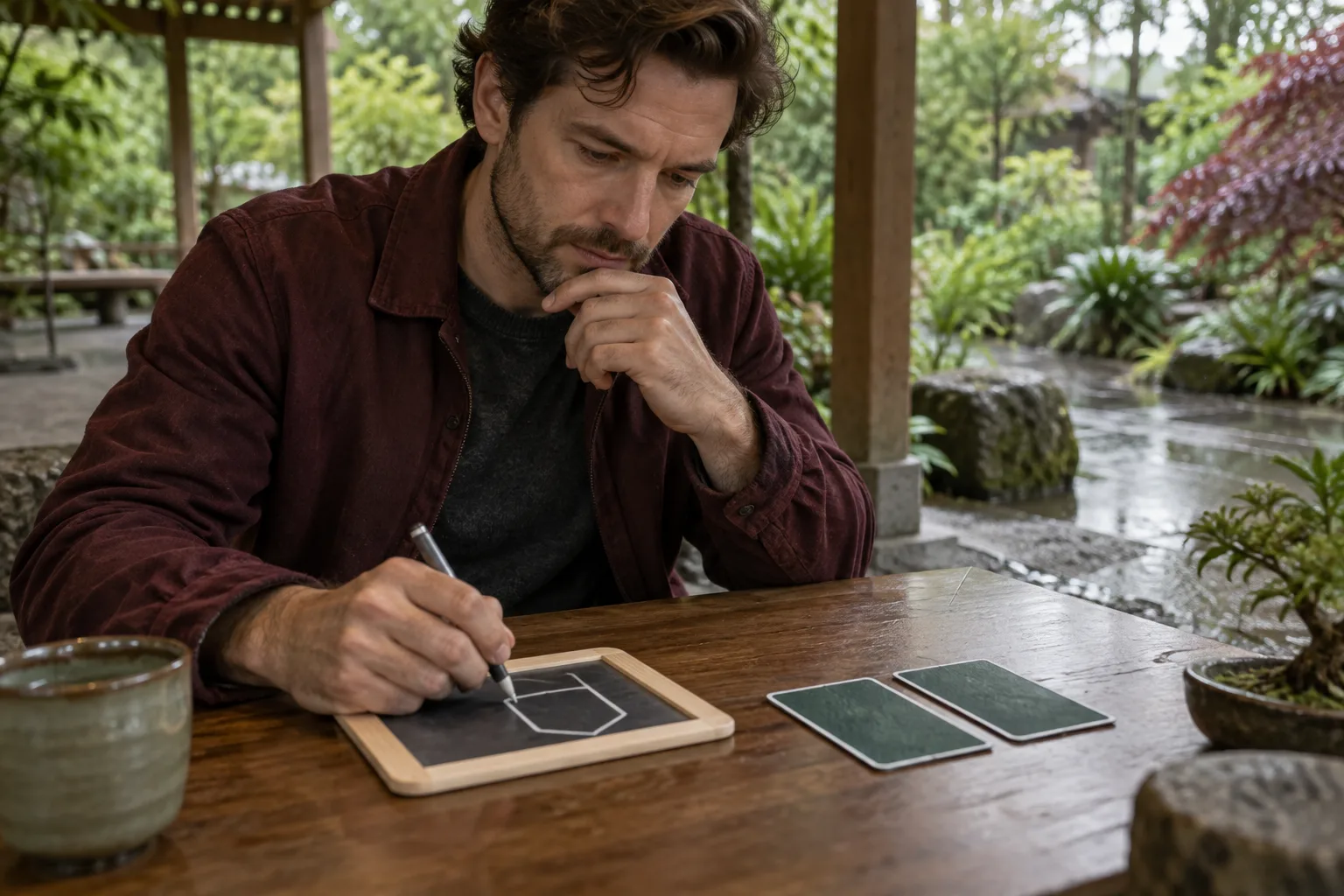
Recognition is the first gate, but delayed recall shows whether the distinction can guide production. Place the reference cards face down. Say the anchor word, reading and diagnostic feature, then write only the relevant component or the full character. Turn the card over and compare relationships rather than artistic quality. Was the long horizontal in the right position? Did you choose 扌 or 彳? One focused correction is more useful than covering a page with automatic copies.
Reverse the direction on another day. Show the character inside a word and ask for the reading and meaning; then begin from the word’s meaning and retrieve the written form. You may need strong recognition for many kanji and active handwriting for only a smaller group. Decide by purpose. Typing still requires you to choose the correct candidate, while handwriting requires reconstructing the form. Both benefit from the same diagnostic comparison, but they demand different final evidence.
A seven-day routine for one stubborn kanji pair
On day one, confirm both characters in a reliable dictionary, select one useful anchor word for each and write the diagnostic feature. On day two, choose between the pair in mixed order and explain the choice aloud. On day three, read each anchor word in two short sentences. On day four, change the font and size. On day five, retrieve the missing character from the word and write or type it. Day six places one item in a short paragraph. Day seven repeats the original test without hints.
Keep a pair in focused practice only while errors remain informative. Once you identify both forms correctly after a delay and inside new sentences, return them to ordinary reading. If confusion reappears, record the exact context and run a shorter repair. Do not restart the entire week automatically. The point is to make the distinction available during language use, not to maintain a permanent ritual around two cards.
Limit intensive work to one or two pairs at a time. Similar kanji are not a special category you must finish before reading Japanese; they are local collisions that become visible through reading. Each repaired pair improves your attention to component position, proportion, word structure and context. Good kanji practice therefore ends outside the card deck: you recognize the right word quickly enough to keep following the sentence.