
Japanese reading practice for beginners often stops on the first page. You recognize the kana, understand a few words, and then meet a form you have never seen. The dictionary opens, the story disappears, and twenty minutes later you have translated two sentences without knowing what happened. That is not a lack of effort. It is a task-design problem: the first reading is being asked to deliver vocabulary study, grammar analysis, perfect translation and story comprehension at the same time.
Your first week needs a narrower target. Choose one very short graded text and learn to keep its situation in view while unknown words remain. Across seven days you will preview, read for the main event, investigate only genuine blockers, reread with sound, locate evidence and retell the sequence. The text stays the same, but the purpose changes. That makes repetition useful and gives you a clear answer to the most disruptive beginner question: should I stop for this word or keep reading?
Choose a text that leaves room to read
A suitable first text is short enough to finish in one sitting and supported by clues you can actually use. Look for a clear situation, an illustration or simple layout, familiar sentence endings and enough known vocabulary to follow at least one event. Furigana can reduce the decoding load, and audio is helpful for later passes, but neither feature makes an advanced text beginner material. If every line contains several essential unknowns, save the text for later rather than treating difficulty as a test of character.
Use a three-minute sample before committing. Scan the first page, identify who or what it concerns, and read without opening a dictionary. At the end, say one honest sentence about what you think is happening. You do not need every detail. You do need a thread that can survive an unfamiliar word. If you cannot name the situation at all, move down a level. If you can follow the scene and feel curious about a few gaps, the text is useful for this week.
Japanese reading practice for beginners starts before line one
On day one, preview the material before decoding it. Examine the title, pictures, speech bubbles, headings, repeated names and any visible numbers. Ask three questions: where is this happening, what kind of text is it, and what might the reader need to discover? This is not guessing the whole story from the cover. It activates a small set of plausible meanings so that later words have somewhere to connect.
The Japan Foundation’s Irodori reading guidance follows a practical sequence: first check the situation, purpose and type of material, then read for an outline or necessary information while using known words and visual clues. It explicitly encourages learners to guess without reaching for a dictionary immediately and to check useful words after the first attempt. That order protects reading as meaning-making rather than turning the page into a vocabulary inventory.
Write one prediction in simple language, then do a complete first pass. Draw a light dot beside a confusing place, but do not investigate yet. When you reach the end, state the main event in one or two sentences. A prediction can be wrong; its value is that it gives you a question to revise. The first successful pass is not a flawless translation. It is a continuous encounter with the whole text.
Give every unknown word one of four jobs
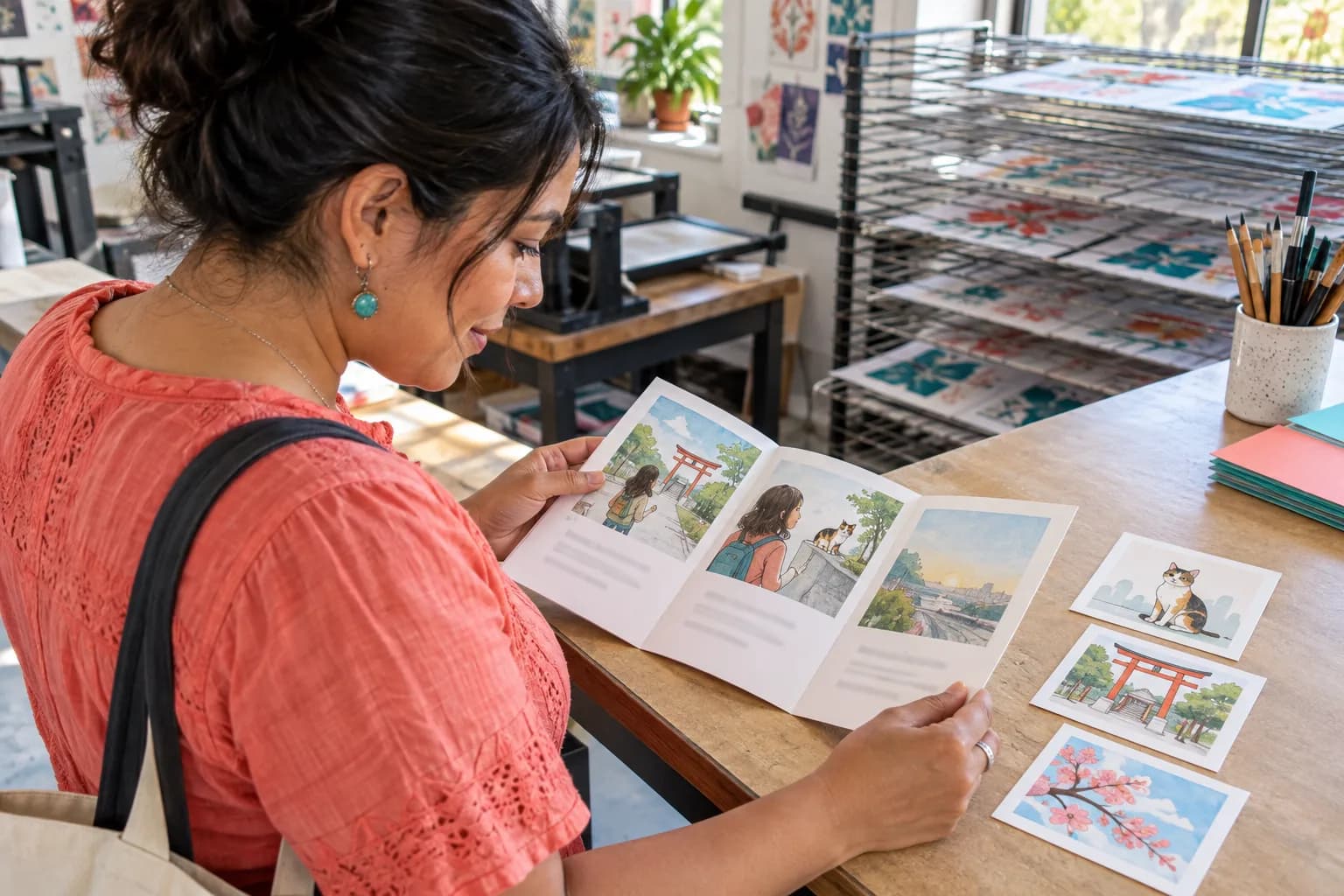
On day two, revisit the dots from your first pass and classify each unknown. Ignore it when the sentence still makes sense without it. Guess it when grammar, an illustration or a nearby contrast strongly limits the possibilities. Mark it for later when it seems useful but does not block the event. Look it up after the pass when the word decides who acted, what changed, where the scene moved or why the outcome matters. The category can change as later sentences add evidence.
This decision is more useful than a fixed percentage of known vocabulary. Two unknown decorative adjectives may barely matter, while one unfamiliar verb can hide the entire action. Ask what you lose by continuing. If you still know the participants, action and direction of the story, keep moving. If two interpretations lead to different events, investigate the word that resolves them. Use the surrounding sentence in the lookup so you choose the relevant meaning rather than the first English gloss.
Set a small lookup budget, such as two genuine blockers for a very short story. The number is a practice constraint, not a universal rule. It makes you rank questions instead of rewarding every interruption. Record the word in its original phrase, its reading and a plain meaning that fits this scene. Do not copy the full dictionary entry. Your aim is to restore the story, then return to it while the answer still matters.
Use KanaWay for one reading loop, not every answer
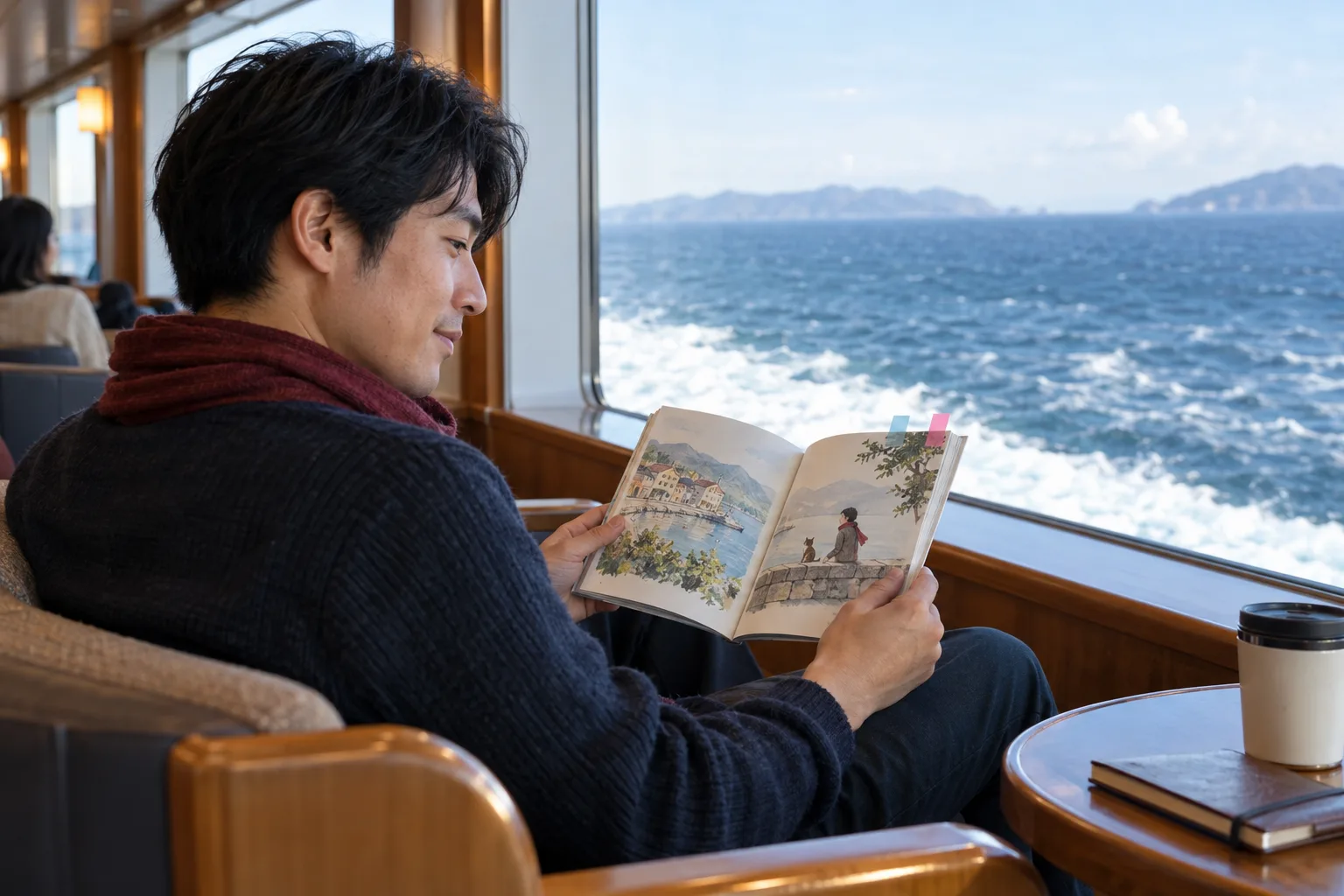
KanaWay is an upcoming Japanese-learning app, and its useful role in this routine is to hold the sequence together. Begin with a short reading at a level you can enter. Preview the situation, make one uninterrupted attempt, and answer a gist prompt before opening support. Mark only the places that stopped the event from making sense. After the pass, check those points, save one or two high-value words in their phrases, and reread the complete text.
Keep your own judgment in charge. The app should not decide that every unfamiliar item deserves a card, and a hint should not replace your first attempt. If a sentence remains unclear, state the exact question: unknown word, unfamiliar form, missing reference or unexpected particle. A precise question leads to a smaller explanation. Then close the help and test the sentence again inside its paragraph rather than admiring the explanation in isolation.
Finish with one small next step: read the passage once more, listen while following the print, or say the event from memory. KanaWay can connect that attempt with later review, but it is not a shortcut around graded material, a dictionary or patient rereading. The workflow is valuable because each tool has one moment. Text first, evidence second, support third, and another meaningful attempt last.
Reread with sound on day three
A reread should change the question. On day three, use the text’s audio if it has a reliable recording. Listen once without following the print and identify where you are in the story. Then listen again while tracking the lines with your finger or cursor. Notice phrase boundaries, familiar particles and where the voice completes a thought. You are connecting an already understood event to its sound, not trying to imitate every syllable at full speed.
Pause only after a sentence or short section. Say what happened, then replay the segment and check whether the print supports your account. If the audio feels too fast, read the sentence silently first and then listen again. Slowing playback can help you locate a boundary, but return to the natural recording before finishing so the altered speed does not become the only version you understand.
End by reading aloud once at a comfortable pace. Keep particles with their phrases and preserve known long vowels and small っ. This is not a shadowing session; print and sound should reinforce a story you already understand.

Change the evidence you seek on days four and five
On day four, read for sequence. Number three to five events in the order they occur. For each event, underline the verb or expression that proves it happened. If the subject is omitted, use the surrounding sentences and scene to decide who is acting; do not insert a name merely because English would repeat it. This pass turns vague familiarity into a map of the story and reveals whether one earlier assumption was carrying too much weight.
On day five, read for reference and contrast. Circle words such as これ, それ, この and その, then identify what each points to. Notice は, が, を, に and で as guides to roles, but read the whole event rather than translating a particle into one fixed English preposition. If the text uses でも, しかし or そして, ask what relationship it creates between the neighbouring ideas. These are small clues with large effects on comprehension.
Write answers in the language that keeps the task moving. A beginner can explain the sequence in English first and reuse one or two Japanese phrases as evidence. Forcing a full Japanese summary too early changes reading practice into composition practice. The Japanese evidence is the bridge: it keeps your interpretation anchored in the text while your explanation remains clear enough to evaluate.
Retell the story on day six without rebuilding every sentence
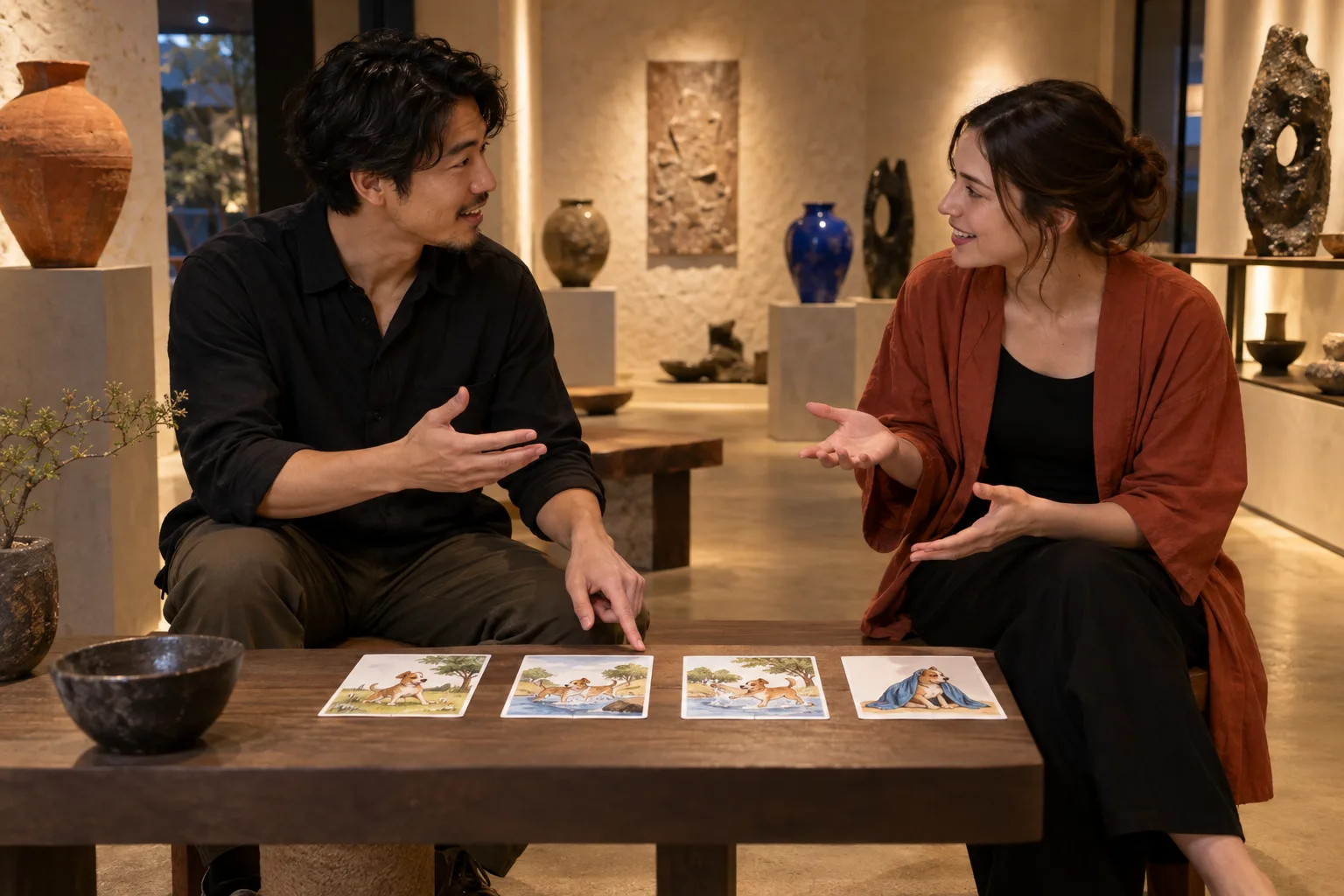
Close the text and place four blank cards in a row: beginning, change, response and ending. Sketch or write one cue on each card. Retell the sequence in any language, then try one short Japanese sentence per card using forms you already control. The aim is not to reproduce the author’s wording. It is to show that the events form a structure you can retrieve after the page disappears.
Open the text and compare. Did you reverse two events, miss the reason for an action, or remember an illustration instead of what the sentence said? Repair only that point. Then choose one saved word and use it in a new, ordinary sentence. If the story says 駅で友だちを待ちました, you might say カフェで姉を待ちました. Preserve the relevant pattern while changing the people or place.
This small transfer distinguishes a word you noticed from a word you can use. It also keeps the weekly routine balanced: reading remains central, while speaking and vocabulary receive a modest task connected to real context. If a new sentence requires grammar you have not learned, simplify it. A correct, owned sentence is better evidence than an ambitious sentence assembled from guesses.
Review the week and choose the next reader
On day seven, read the text once without notes. Time is optional; continuity matters more. Compare this pass with day one. Can you identify the situation sooner, keep going through minor gaps, explain the event and find the sentence that supports your interpretation? Count only lookups that were still necessary. A good week reduces dependence on interruption and improves the quality of your questions, even if the text is not effortless.
The extensive-reading organization Tadoku recommends starting with very easy material, reading without a dictionary during the reading itself, skipping difficult parts and changing books when a text remains too hard. Those rules are deliberately protective of flow. Apply them with judgment: a brief post-reading lookup can serve focused study, but repeated mid-sentence searches are evidence that the material or the task should change.
Choose next week’s text at roughly the same difficulty if this one became smoother only after several passes. Move slightly upward when the first pass already had a clear event and most questions concerned detail. Move downward when you still cannot retell the sequence after support. Keep a one-line log with title, main event, two blockers and next choice. That record shows growth more honestly than pages counted without comprehension—and it makes the next Monday easy to begin.
Finish the week able to follow and retell one short text. Breadth can grow after continuity becomes a habit.