
You can learn katakana free from a chart and still freeze when you meet a word such as コンピューター or ベッド. The problem is not necessarily weak character recall. Loanwords are reshaped to fit Japanese timing and available sound patterns, so the original spelling is only a clue. A vowel may be inserted, a long vowel receives its own beat, a consonant closure appears as small ッ, and small kana combine with a full-sized character to represent one compact sound.
The practical goal is to read the Japanese word that is actually written, then connect it to a meaning and reliable audio. This guide explains the changes beginners miss, shows how to count their timing and gives you a seven-day practice sequence that needs no paid resource. The examples use established Japanese spellings and straightforward romanization, but romanization is a temporary check. Your final reading should come from katakana itself rather than from reconstructing an English word letter by letter.
Learn katakana free by treating loanwords as Japanese
Katakana often writes words borrowed from other languages, but the result belongs to Japanese. コーヒー, kōhī, means coffee, yet its four timing units are コ・ー・ヒ・ー, not a copy of the English syllables. テレビ, terebi, comes from television but is shortened and pronounced with Japanese sounds. If you stare at the source spelling first, you are tempted to pronounce what you already know. If you read the kana first, the marks tell you what Japanese listeners expect.
Use three questions whenever a loanword feels strange. Which full-sized kana provide the basic sequence? Which marks change timing, especially ー, ッ or ン? Which small kana join a neighbor instead of forming a separate beat? Read that structure aloud before guessing the source. Then confirm meaning and audio in a dependable dictionary. This order keeps familiar English, Spanish, Portuguese, French, Italian or German spelling from overriding the Japanese form.
Hear mora timing before translating the word
Japanese rhythm is usefully practiced in morae, short timing units that are often visible in the writing. デスク, desuku, “desk,” can be tapped デ・ス・ク. ストライク, sutoraiku, “strike,” unfolds as ス・ト・ラ・イ・ク. The extra vowels are not careless additions. Japanese sound patterns generally do not permit the same clusters and final consonants as English, so the borrowed form is adapted. Reading each written unit prevents you from swallowing the ウ in デスク or compressing ストライク into one English-shaped syllable.
The Japanese Agency for Cultural Affairs publishes official conventions for writing foreign words. Its guidance explicitly uses small ッ for a consonant closure and ー for a long vowel, while also recording conventional exceptions. That last point matters: do not invent katakana from a source word using one automatic formula. Learn the established Japanese item, use the conventions to decode it and check audio when the spelling is unfamiliar. The system is regular enough to read, but borrowing history means it is not a perfect conversion machine.
Give the long vowel mark a full beat
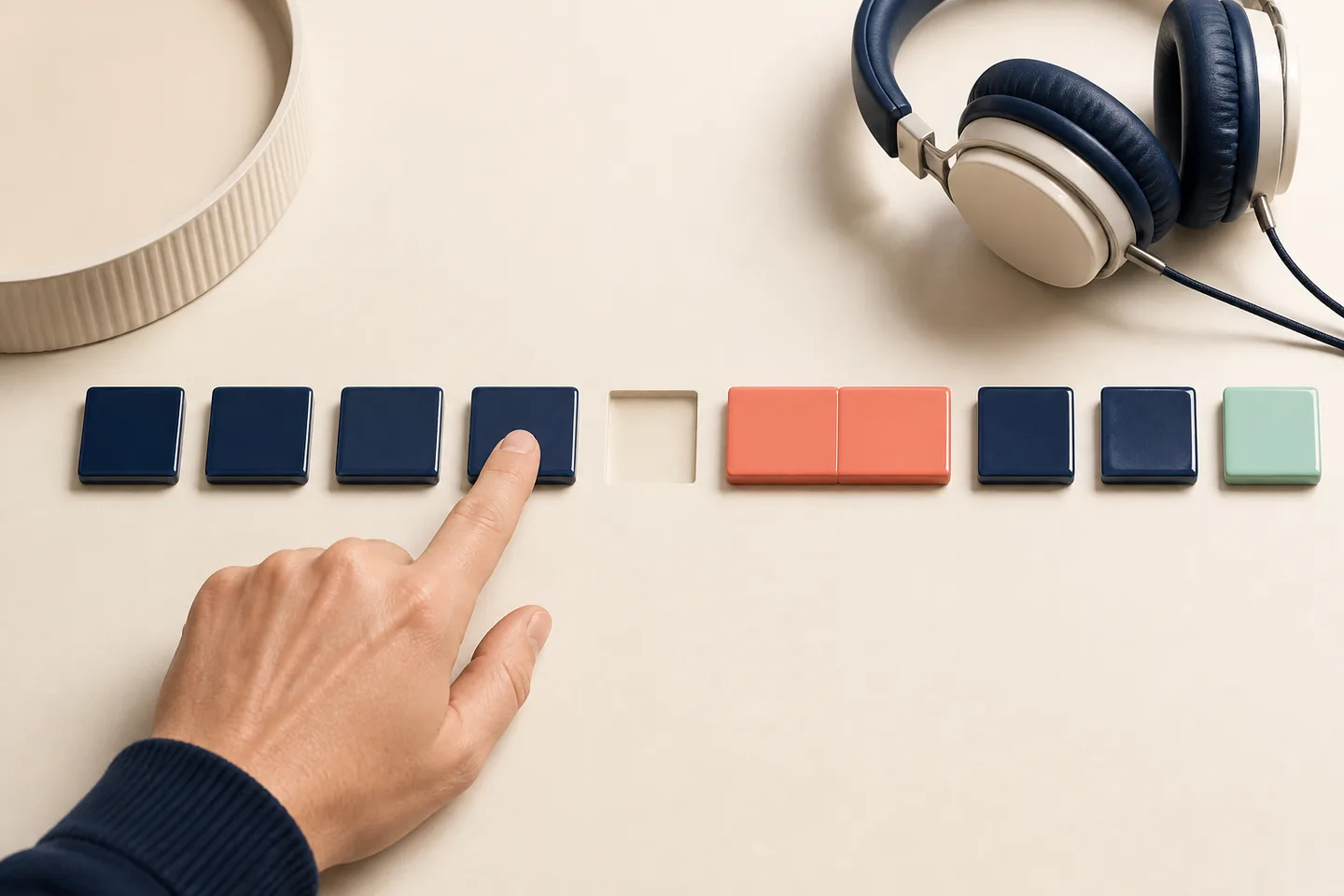
The bar ー extends the vowel before it and occupies a timing unit of its own. ケーキ, kēki, “cake,” is ケ・ー・キ. ビール, bīru, “beer,” is ビ・ー・ル. In コーヒー, both bars matter. Beginners often recognize the base characters and glide past the bars because they look like punctuation. Instead, keep your mouth on the preceding vowel for one additional beat. Do not insert a new vowel quality and do not read the mark as a dash.
Length can distinguish words, so this is not decorative spelling. ビル, biru, is a building, while ビール, bīru, is beer. Practise the contrast with a steady tap: ビ・ル has two units; ビ・ー・ル has three. Record both, leave a short pause, and listen without looking. If they sound identical, exaggerate the extra beat once, then return to natural speech. The target is reliable duration, not extra loudness or stress on the long syllable.

Read small ッ as a held consonant, not tsu
Small ッ marks a brief closure before the following consonant. カップ, kappu, “cup,” can be timed カ・ッ・プ: say カ, hold the lips ready for p during the ッ beat, then release プ. ベッド, beddo, “bed,” is ベ・ッ・ド. The small character is not pronounced tsu, and it does not merely tell you to speak faster. Its silence or closure occupies time, which is why omitting it changes the shape Japanese listeners hear.
Compare a full-sized ツ with small ッ in words, not as isolated pictures. In カツ, katsu, both カ and ツ have their own vowel. In カット, katto, “cut,” the small ッ closes into the following t before ト. Use a hand tap for all three morae even though the middle one has no vowel. This physical beat stops you from rushing over the mark. Then alternate カット and カト slowly so you can hear what the written contrast contributes.
Join small kana into one compact sound
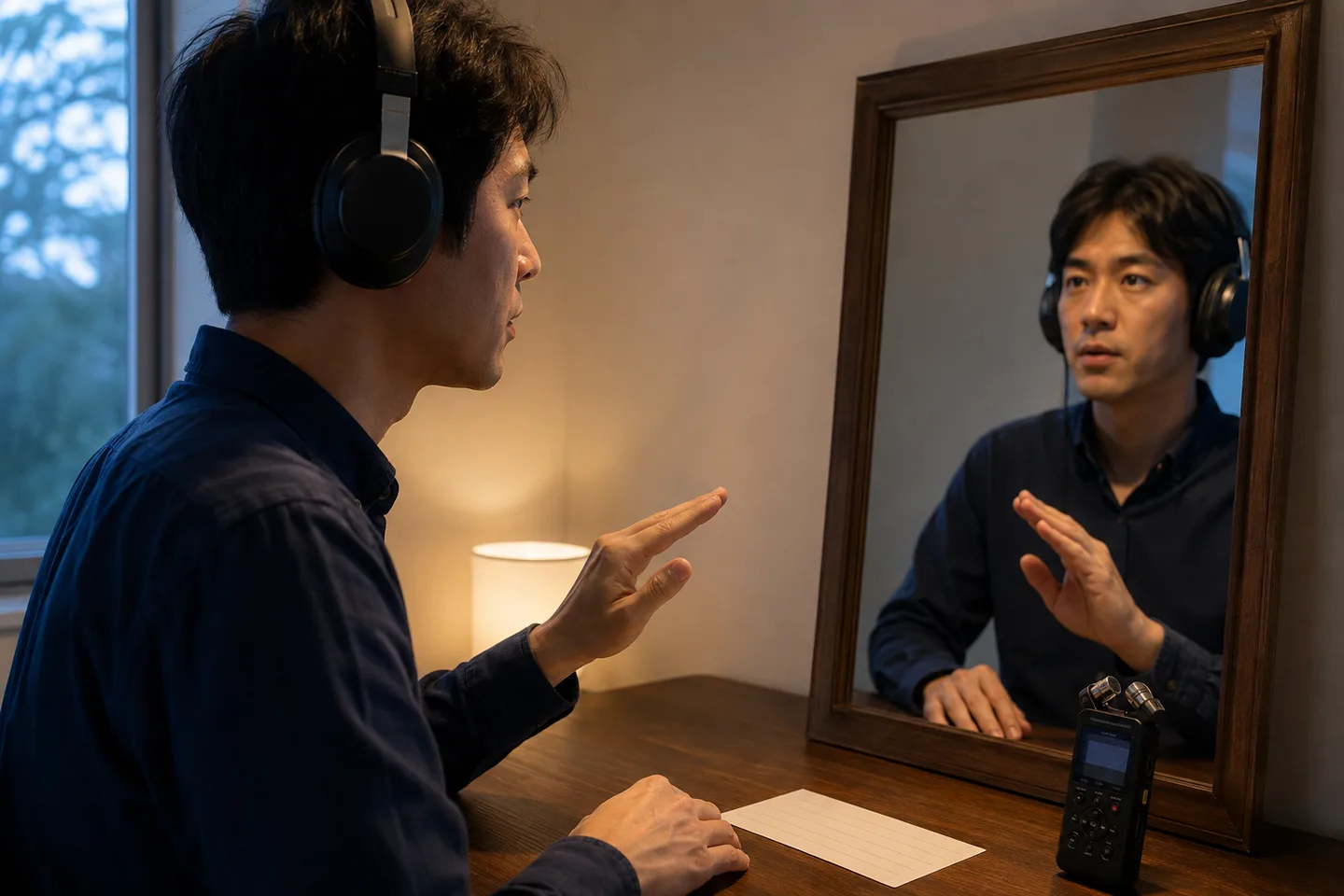
Small ャ, ュ and ョ combine with the preceding kana. コンピューター, konpyūtā, contains ピュ, pyu, as one compact mora, followed by ー. Do not read ピ・ユ as two separate beats. The same principle appears in キャ, kya, キュ, kyu, and キョ, kyo. Check size carefully: キユ with a full-sized ユ is different from キュ. Practise by covering the rest of the word, reading the pair once, then reconnecting it to the complete rhythm.
Modern loanwords also use small vowels to represent sound combinations outside the basic chart. ファ in ファイル, fairu, “file,” represents fa; ティ in パーティー, pātī, “party,” represents ti; ウェ in ウェブ, webu, “web,” represents we. Treat each combination as a reading unit rather than naming its two visible characters. Learn these patterns through several real words, because a list of possible combinations is harder to retrieve than a familiar sound repeated in context.

Expect adaptation, shortening and meaning shifts
Recognizing the source can help, but it can also mislead. コンビニ, konbini, is shortened from convenience store; it does not reproduce the whole phrase. アルバイト, arubaito, means part-time work and entered Japanese through German Arbeit. パン, pan, “bread,” is historically connected with Portuguese rather than modern English. A learner who assumes every katakana word is intact English will misread both sound and meaning. Treat source history as an interesting memory aid, never as the final definition.
Some familiar-looking words have a narrower or shifted use in Japanese. The safe habit is to store the Japanese pronunciation, the meaning found in a Japanese context and one natural combination. Read コンビニで買う, konbini de kau, “buy at a convenience store,” rather than keeping only an English label. When you meet a surprising word, ask what it does in this sentence before asking which foreign word resembles it. Context protects you from confident but inaccurate guesses.
Use a three-pass routine for every difficult loanword
On pass one, ignore the possible source and mark the written structure. Circle ー, underline small ッ, box ン and join small kana to the character before them. Tap the morae and read slowly. On pass two, listen to a reliable recording while following the katakana. Notice exactly where your timing differed. Was a long vowel short, a closure missing, or a compact pair split? Repeat only that contrast, then read the complete word again without romaji.
On pass three, put the word into a small retrieval task. Hide the katakana and recall it from an object or situation; later, show the written form and produce the sound before revealing audio. Finish with one short phrase or sentence. Keep an error label such as long vowel, small tsu, inserted vowel, small combination or meaning guess. After ten words, count the labels. The most frequent category tells you what tomorrow’s practice should isolate.
- Structure: mark the characters and timing signs before guessing a source.
- Sound: compare one specific timing feature with dependable audio.
- Meaning: confirm the Japanese use in context, not only the foreign resemblance.
- Retrieval: return from an object, situation or sentence to the katakana word.
Follow a seven-day free katakana loanword plan
Day one reviews the base katakana through ten easy words. Day two isolates long vowels; day three focuses on small ッ; day four practises small ャ, ュ, ョ and modern small-vowel combinations. On day five, mix the categories and diagnose each mistake. Day six moves outside the practice list: find five words on packaging, a menu, transport information or a Japanese website, then verify their readings instead of guessing. Avoid collecting dozens of screenshots. Five carefully decoded items are enough.
On day seven, read the week’s words cold, listen without text and use several items in short phrases. Keep three piles: accurate immediately, accurate after correction and still unclear. Next week starts with the unclear category rather than another complete chart. You have learned katakana when marks such as ー and ッ automatically shape the sound, compact combinations stay together and an English-looking word no longer makes you abandon the Japanese rhythm. Free practice becomes effective through precise contrasts, not sheer repetition.
- Days 1–2: base recognition and long-vowel timing.
- Days 3–4: small ッ, small y kana and modern combinations.
- Days 5–6: mixed diagnosis and five verified real-world words.
- Day 7: cold reading, listening and short contextual use.
Read what Japanese writes first. The source word can help with meaning only after the katakana has established the sound.