
A JLPT N3 study plan should bring longer reading passages into your routine before every grammar pattern and kanji feels secure. Begin when you can understand the main event in a short paragraph, identify who is doing what, and recover after an unfamiliar word. You do not need to read a full N3 passage smoothly on the first attempt. Waiting for perfect vocabulary often delays the exact skill the test asks you to develop: keeping the thread of a text while information accumulates.
The useful transition is gradual. Choose a passage with a clear situation, read once for its purpose, map how its paragraphs connect, answer a small question from evidence, and revisit only the words that blocked that answer. Increase the length when your summary remains stable, not because a calendar says you have reached N3. This guide gives you a four-week reading sequence and a way to tell whether a text is stretching you or simply overwhelming you.
Start the JLPT N3 study plan with a readable stretch
Your first longer text should be just beyond the length you read comfortably, not a wall of unknown sentences. Take a short notice, message or simple explanatory paragraph you can usually finish. Add one more paragraph that develops the same situation. If you can state the overall purpose after a first pass, the stretch is useful even when several details remain uncertain. If you cannot identify the subject or the basic change after two passes, step down in complexity before adding length. A shorter text read with understanding is better preparation than a long text converted into a translation puzzle.
Choose material by task as well as difficulty. A train notice asks you to find a change; a short opinion asks for a reason; a letter asks you to track the writer's intention. The official N3 item guide includes short, medium and long-passage comprehension plus information retrieval, so an exclusive diet of one genre leaves a gap. For this week, keep two short pieces and one slightly longer piece. Record what each asks you to do, then decide whether the next text needs more length, a new genre or more support.

Know what N3 reading actually asks you to follow
The official N3 item-purpose document distinguishes comprehension of short passages, key words and causal relationships in medium passages, summary and logical development in long passages, and the retrieval of necessary information from practical materials. These are descriptions of question types, not a fixed daily word target. A learner may know every isolated word in one paragraph yet still miss why its second sentence corrects the first. Conversely, an unknown noun may be irrelevant if the question asks for the writer's conclusion. Train the relation that matters rather than counting every unknown item as equal.
On a first pass, ask three questions in order: what kind of text is this, what does the writer want the reader to know or do, and where does the direction change? A schedule, a recommendation and a short explanation can all contain difficult vocabulary, but their organizing logic differs. Underline only a few pivots: a reason, a contrast, a condition or a final decision. Then give a one-sentence summary without looking back. If you cannot summarize yet, reread the hinge between paragraphs before opening a dictionary. This is a reading skill, not a claim that vocabulary never matters.
Map the paragraph before translating its details
A longer passage becomes manageable when each paragraph has a job. Label the first as situation, the next as reason or complication, and the last as result or recommendation. These labels are provisional; the text may take a different shape. The exercise forces you to follow what changed between blocks of Japanese. A paragraph beginning with しかし signals contrast, while そのため often introduces a consequence. Those expressions guide attention, but do not let one connector substitute for reading the sentence around it. The author can quote a view and then reject it, or present a condition that limits a recommendation.
Try this on a simple message about a club event moving indoors because of rain. The opening tells you the event; the middle gives the weather reason; the final paragraph gives the new room and what to bring. If you translate every noun first, you may forget which detail the reader actually needs. If you map the purpose first, unfamiliar words can be sorted into essential and optional. Write three short margin labels in your own language and test whether they still fit after rereading. If a label fails, revise the map rather than forcing the text into a memorized template.

Use questions as a reason to reread, not as a shortcut
Reading the question before the passage can help you know what to watch for. It can also make you hunt a matching word and ignore the rest of the text. Use the question as a task, then read enough surrounding sentences to understand the answer. For a reason question, find the event and the sentence that explains it. For an opinion question, distinguish the writer's final view from a view the writer reports. For a practical notice, verify whether the condition applies to everyone or only to one group. The correct choice should survive a short explanation in your own words.
Make an evidence note no longer than a line: answer, location and why the closest alternative fails. If you cannot point to the relevant part of the text, you may be relying on common sense rather than Japanese. If you can point to it but still choose incorrectly, inspect a connector, negative form, reference word or time sequence. This separates a language gap from a test-taking gap. Work without a timer first; a clock only becomes useful once you can diagnose why an answer was right. Then introduce time limits in a later phase.
Find evidence without marking every unfamiliar word
When a long passage feels dense, mark the sentence that changes the answer, not every word that could be looked up. Read once with no dictionary and write a rough summary. Read again with the question in mind and place one mark beside the probable evidence. Only now look up a word if its meaning changes your interpretation of that evidence. A keyword repeated in the question can be a useful signpost, but the actual answer may be paraphrased elsewhere. Check the surrounding cause, comparison or exception before deciding.
A practical limit helps: choose at most three lookups for a first training pass, then finish the text. This is a study constraint, not an exam rule or a magic number. If the same unknown expression blocks the main point twice, it deserves a note and later review. If it appears only in scenery, let it go. After checking the answer, reread the whole passage once more so that the repaired sentence rejoins the argument. A vocabulary notebook should preserve the word with its sentence and function, not become a list detached from what the author was doing.
Build a four-week progression instead of a single jump
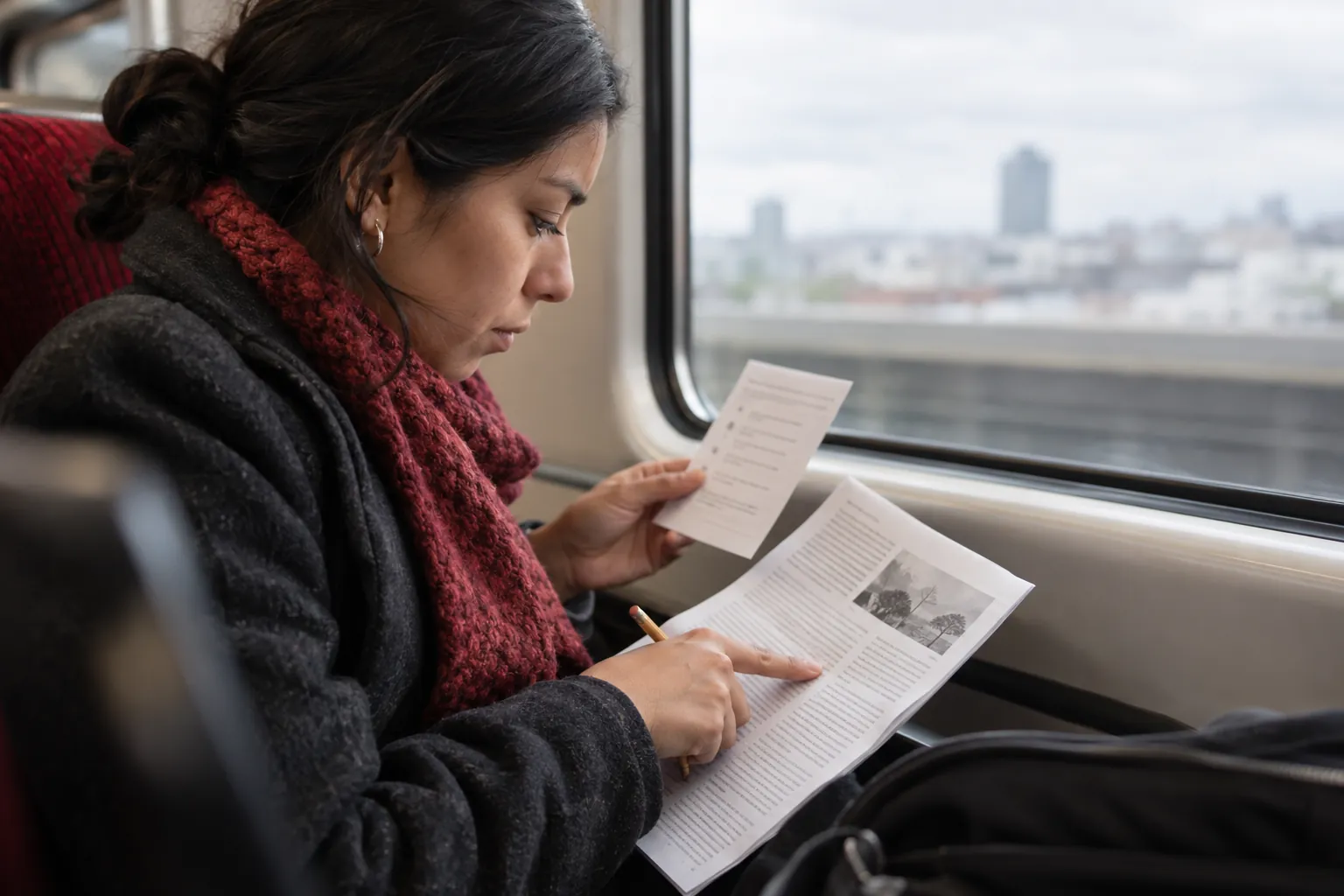
Week one is for reliable meaning. Read two short pieces and one slightly longer text, each twice: first for the broad purpose, then for one question and its evidence. Week two keeps the same frequency but adds paragraph labels and one new genre, such as a notice beside an explanatory passage. Week three increases one passage's length while the other sessions stay comfortable. Week four uses one official-style reading set under a gentle time limit, followed by slow review. The sequence is flexible: repeat a week when you can answer only by translating nearly every sentence.
Use a 20-minute session as a workable example, not a universal prescription. Spend two minutes previewing the type of text, eight reading and summarizing, five answering with evidence, and five reviewing one decisive error. On days with less time, keep a single passage and the summary; do not sacrifice the thinking step just to complete a larger count. Pair this with listening and grammar elsewhere in your week so reading practice does not turn the whole N3 plan into a one-skill sprint. The broader goal is steady understanding across skills, with reading length increasing only when it earns its place.
Bring in official material after you have a method
The JLPT publishes official practice workbooks and sample items for N3 reading. Use them to learn how a question is framed and to test whether your passage routine transfers to exam material. Do not copy an official answer into a review sheet and call it reading practice. Attempt the set first, mark your evidence, and then compare your reasoning with the answer. A missed question about the main point needs a different repair from a missed practical detail. Your error log can use four labels: text structure, word or form, evidence selection, and time management.
Official examples are a calibration tool rather than an entire reading diet. They show the shape of the test, while varied ordinary texts help you stay with Japanese beyond one familiar question format. Avoid inventing an official N3 vocabulary quota from a study book's contents; the test site describes levels and item types, not one universal fixed list of words or kanji. If you plan to sit the test, check current dates and local registration rules on the official site separately. This article addresses when and how to grow reading length, not a promise of a particular score.
Decide when to lengthen the next Japanese text
A simple progress note beats a vague feeling of speed. After each session, record the text type, whether you could state its purpose, whether your answer had evidence, and what actually stopped you. If three different passages in a row yield a stable one-sentence summary and a justified answer, add one paragraph or try a less familiar genre. If you lose the thread in the middle, hold the length steady and work on paragraph relations. If you understand the text but cannot finish under a timer, practice a few timed sets without abandoning untimed reading. Each response targets a distinct problem.
At the end of the week, reread one earlier passage without your notes. You should be able to tell its main point more directly, even if some vocabulary is still new. That is a useful sign that structure and meaning are becoming available together. Do not judge progress only by the number of pages, the longest text attempted or a single practice score. A sensible JLPT N3 study plan lets you choose the next challenge from evidence: more length, a different text purpose, firmer vocabulary in context, or quicker retrieval of a known pattern. Start the longer passage now, but let comprehension determine the next step.