To learn to read Japanese, you do not have to choose between permanently visible furigana and a page of unsupported kanji. Furigana are small kana that give a reading for adjacent characters. They can let you enter a text that would otherwise stop at its first unfamiliar word. Yet if your eyes follow only the small kana, a familiar written word may never receive an independent reading attempt. Treat the guide as a tool you can show, hide and return to, according to the job of each reading pass.
This is a practical decision, not a test of toughness or a rule tied to one JLPT level. A bus notice, short recipe or simple message asks you to understand information, not perform a character-count stunt. You can read with support to grasp a new text, conceal support for words you expect to know, and reveal it again when an uncertain reading would distort the message. The routine below tells you what to do before, during and after that reveal.
Learn to read Japanese by choosing the reading task first
Before touching the furigana, decide what you need from the text. Are you trying to find a meeting time, follow a recipe, understand the main event in a message, or retrieve the reading of a word you studied yesterday? Those are different tasks. For a first encounter with unfamiliar material, visible readings may preserve momentum. For a deliberate word-reading check, the guide must be hidden until after your attempt. For a real-life decision, understanding the relevant information matters more than pronouncing every character. State the purpose in one sentence before you start.
The Japan Foundation's Irodori reading guidance provides a useful reality check: everyday materials often lack furigana, and learners should first use known words, pictures and context, then check useful unknown words and reread. That does not mean throwing support away at the beginner stage. It means making the support answer a specific question after you have inspected the text. A recipe picture can tell you what the page is about; a visible reading can then resolve a word that blocks a key instruction. A dictionary and furigana should follow an attempt, rather than replace every attempt.
Show furigana when the text would otherwise stall
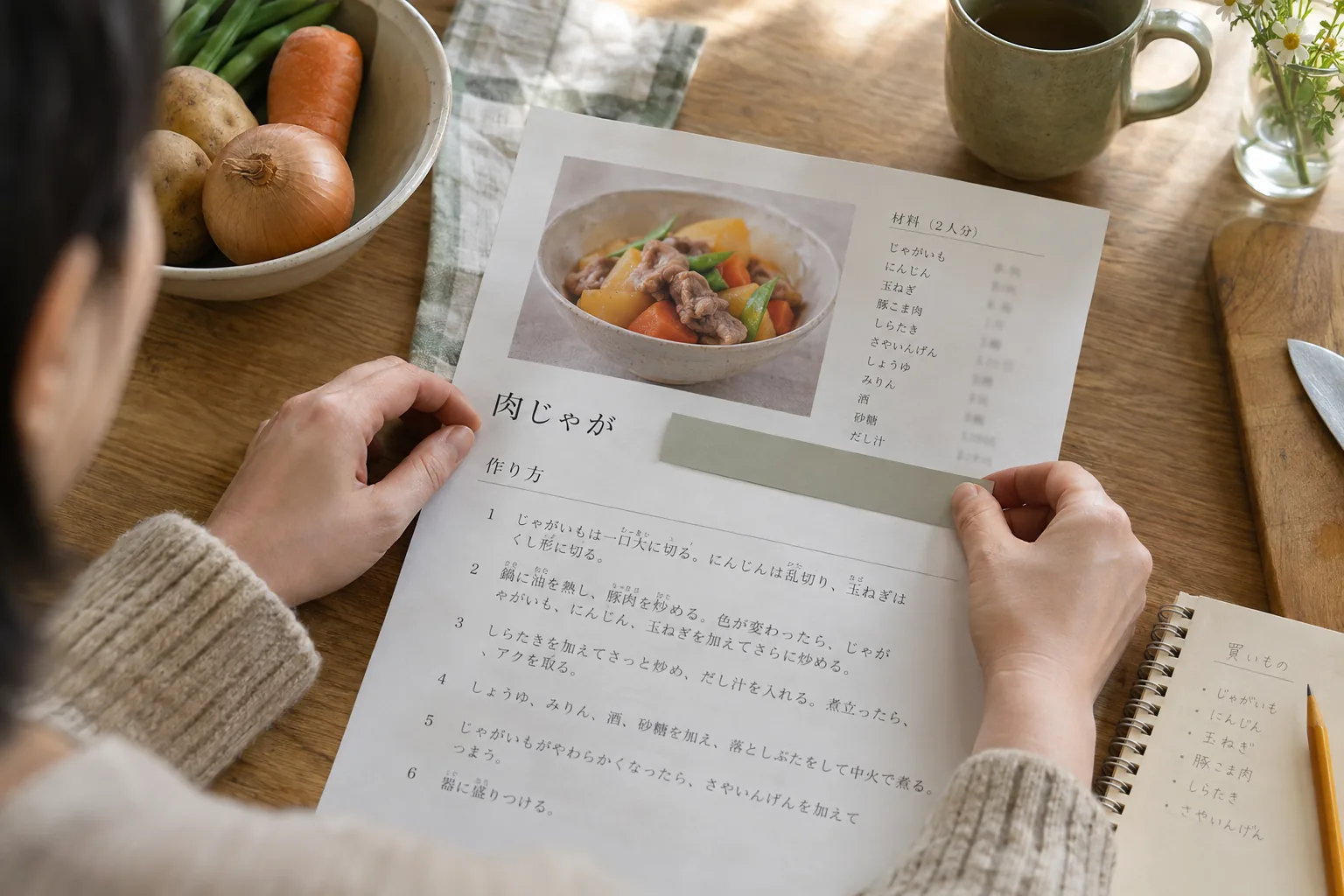
On the first pass, keep guides visible for genuinely new words if hiding them would make every line a decoding project. You still need to look at the larger written word. Read the whole phrase, identify the verb or instruction, and say what is happening. For example, a recipe may show 材料 with a reading beside it. The reading helps you say ざいりょう, but it does not by itself tell you that the heading introduces ingredients. The bowl, list structure and following quantities supply the broader meaning. Use those clues together instead of substituting pronunciation for comprehension.
Choose material with a manageable number of unknown phrases and a purpose you can explain. A short notice with one unfamiliar place name is more useful than a long page where every sentence requires several lookups. On paper, mark only the words that stopped your understanding. On a screen, pause before opening a reading or dictionary entry. If you can paraphrase the message while missing a decorative adjective, keep reading; if the unknown word changes the time, destination or action, check it. The first pass is successful when you can state the text's main point, not when every guide has been consulted.
Hide only the readings you are ready to retrieve
After you understand the passage, cover the furigana over a few target words. Start with words you have met more than once, especially words whose meaning you already know from a sentence. Do not remove every guide from a new text and call the resulting struggle progress. If 駅 appears in a familiar travel passage, try to retrieve えき before looking. If an unfamiliar name occurs once, leave its guide in place or check it promptly. The point is to discover whether a known word is available without the cue, not to guess an unknown name until you give up.
A folded card, movable paper strip or reader control can hide the small kana. Keep the sentence visible. Context helps select a word, and the task is still reading connected language rather than naming a character in isolation. Give yourself a brief honest attempt: identify the word boundary, propose the reading and say what role the word plays. Then reveal. If you cannot read it yet, label it as new; if you knew it only after seeing kana, label it as recognition without retrieval. Those are different outcomes and deserve different next steps.
Reveal the guide, then repair the whole sentence
The reveal is feedback, not the end of the exercise. Compare your attempted reading with the guide. If you were wrong, pronounce the complete word, attach it to its meaning in this sentence, and reread from the beginning of the clause. Do not stare only at the kana above one character. Japanese words can use different readings in different compounds, and your goal is to recognize the written word in this context. A single corrected sound without a recovered sentence leaves the reading fragile and the message unresolved.
If you guessed the reading correctly but misunderstood the action, the problem was comprehension rather than furigana. If you understood the sentence yet misread one place name, you may not need to interrupt the whole passage. Write a tiny correction note such as 'reading', 'meaning', or 'sentence structure'. This diagnosis keeps the next review narrow. Later, show the same word in a different sentence and make a fresh attempt before revealing the guide. A memorized page layout is not evidence that the word has become readable elsewhere.
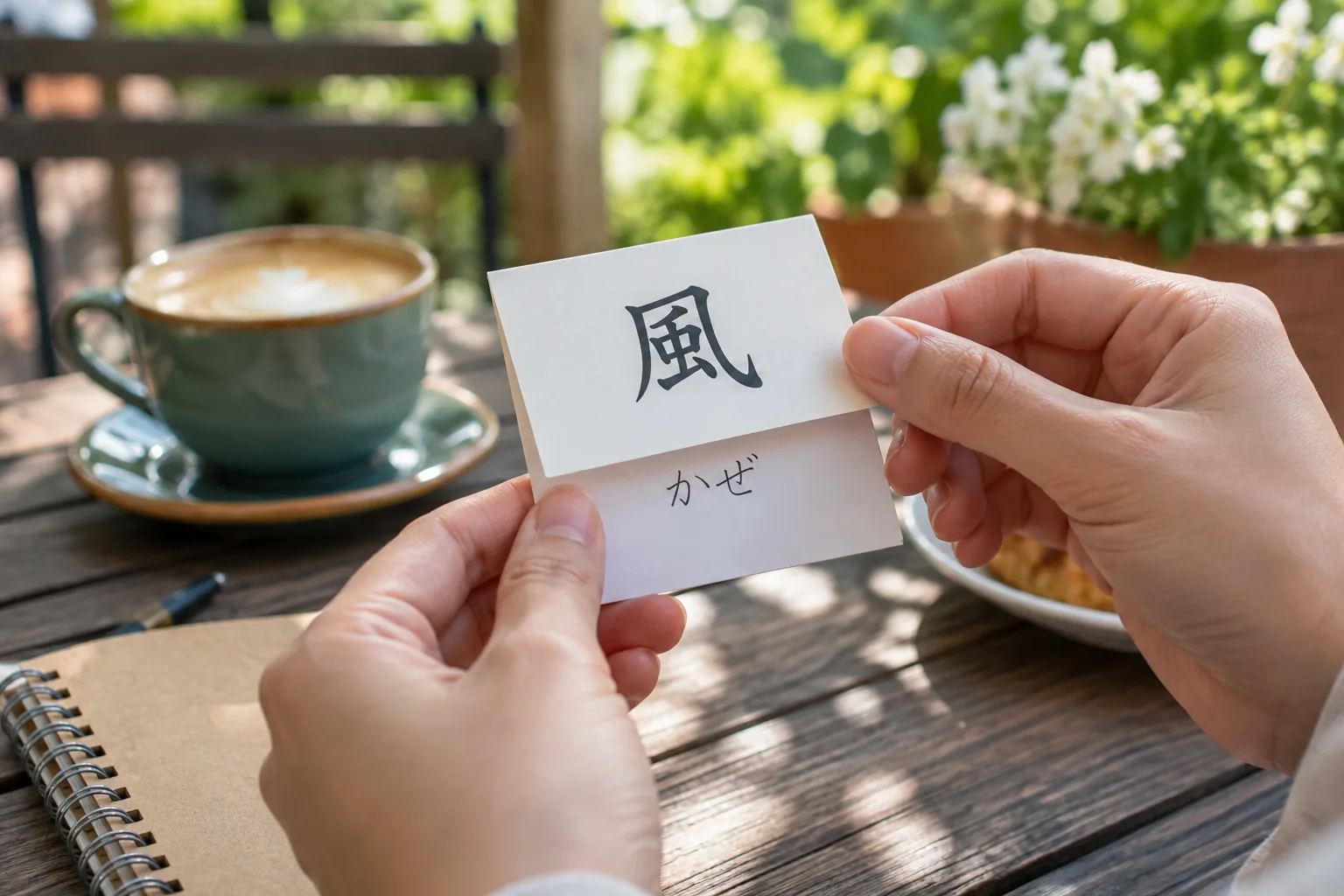
Do not confuse kana fluency with word recognition
Furigana are normally written in kana, so you need workable hiragana reading before this method feels light. If kana still take several seconds each, a guided page may simply move the decoding bottleneck from kanji to tiny print. Practise the kana shapes separately for a few minutes, then return to a short sentence. Romaji under every word is a different support: it can keep your attention on Latin letters while the Japanese spelling remains unattended. Aim to read the kana guide directly and connect it with the written word above it.
Meaning is another separate layer. You can pronounce 入口 as いりぐち and still fail to act on a sign if you do not know it means entrance. You can recognize a familiar word's meaning from a picture while forgetting its spoken form. Keep three questions distinct: Can I identify the written word? Can I say its reading? Can I understand what it contributes here? An honest reading journal records whichever layer failed. Otherwise, a comfortable phonetic pass can look like fluent reading even while the sentence's instruction remains unclear.
Bring furigana back when accuracy matters
Hiding guides is a training choice, not a duty during every encounter. Restore them when an uncertain reading blocks comprehension, when you are about to say a name aloud, or when a practical instruction requires accuracy. A date, platform, destination or dosage is not a place to perform an extended memory test. Check the reading, confirm the meaning from the full sentence and act on reliable information. With names and unusual readings, even experienced readers may need a guide. Keeping one visible does not erase the independent attempts you made on other words.
The reverse also matters: do not add furigana to every word of a simple text just because the option exists. If the passage is already comfortable, use it for flow and meaning. Hide support over a small set of familiar targets, then show it again only where correction is useful. You can make this decision word by word. That flexibility is more precise than a permanent on/off setting and avoids a false milestone such as 'all furigana must disappear by a particular level'. Text difficulty, task purpose and word familiarity are better guides.
Run a ten-minute show–hide–return session
Choose one short passage with an obvious purpose: a message about a meeting, a recipe step or a notice about opening hours. Spend two minutes inspecting its context and reading for the main point with support where necessary. In the next three minutes, underline three to five words that seem familiar and cover only their guides. Attempt each reading in its sentence before any reveal. Spend two minutes checking the hidden readings and repairing complete clauses. Use the final three minutes to reread the passage without stopping and summarize its message in one sentence.
Keep the record small: text source, purpose, words attempted, and which errors were reading rather than meaning. A correct attempt in the original sentence earns one later check in a changed context, not a permanent victory mark. A miss earns one useful model sentence rather than a page of copied kana. If nearly every word is a miss, pick an easier passage next time. If all targets are effortless, choose a more demanding text or hide one extra guide. The routine is adjustable because the purpose is better reading, not obedience to a timer.
Check transfer on a new page, not the same layout
The final test takes place away from the original page. Find a different short text that reuses one or two words, perhaps a station notice after a travel message or a new recipe after a menu. Read for its purpose first, then attempt the familiar written words without looking at guides. If a word is readable only in its original typeface, position or sentence, you have learned that particular cue arrangement. Return to a clear example, check the guide, and try again in a new setting. This is information for your next session, not a reason to discard support entirely.
The Japan Foundation's sequence of reading the overall message, checking useful words and reading again points toward this broader goal: use help to get back into meaningful reading. Keep furigana where it opens a genuinely new text; hide it where a familiar word deserves a retrieval attempt; restore it when feedback or accurate action requires it. Repeat that cycle across ordinary materials. Progress is visible when you understand the message sooner, need fewer repairs on familiar words, and can carry those words into another page without depending on the same small kana above them.